Does Baptism Save? A Clear Framework for a Divisive Question


 RSS Feed
Episode 2.82
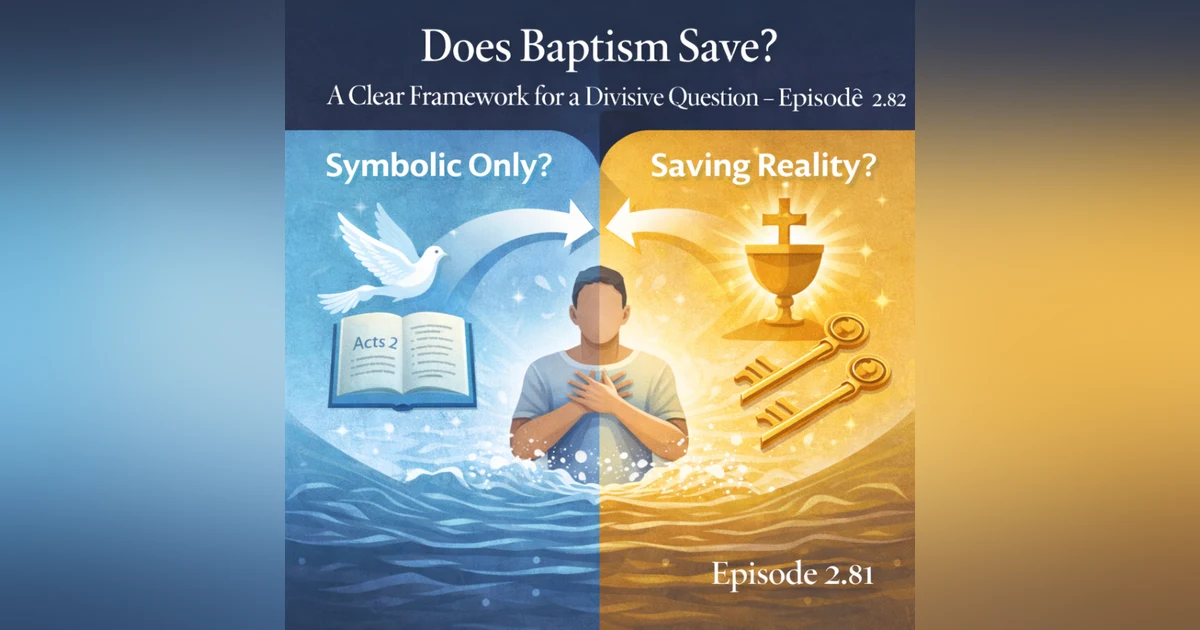
In this episode, Michael and Zach examine the doctrine of baptism using William Lane Craig’s carefully defined taxonomy, focusing not on mode or tradition, but on the central theological question: what, if anything, does water baptism actually do?
The discussion begins by framing baptism as commanded, important, and normative for Christians—while also recognizing that disagreements over baptism, though real, are non-cardinal. From there, the episode walks through Craig’s two broad categories: the figuralist view, which sees baptism as symbolic only, and the realist view, which holds that saving realities are somehow present in the act itself.
Under the realist umbrella, three increasingly strong models are evaluated: occasionalism, instrumental causation, and proximate causation. Each is assessed for biblical coherence, theological consistency, and historical pressure—particularly the early church’s reliance on exceptions such as the thief on the cross, baptism of blood, and baptism of desire.
The episode then turns to Craig’s strongest exegetical argument from Acts, noting that water baptism and Spirit baptism never coincide in the narrative. This observation proves decisive in undermining all sacramental realist models, not merely the strongest versions. Infant baptism is also addressed, with attention to faith as a necessary prerequisite for baptism in the New Testament.
The episode concludes by articulating Craig’s positive position: salvation is by faith alone, while baptism stands as the ordained culmination of conversion—an act of obedience, public identification with Christ, and entry into the visible church. Baptism does not save, but those who are saved are called to be baptized.
Find our videocast here: https://youtu.be/EacK2AZXT6c
Merch here: https://take-2-podcast.printify.me/
Music from #Uppbeat (free for Creators!):
https://uppbeat.io/t/reakt-music/deep-stone
License code: 2QZOZ2YHZ5UTE7C8
Find more Take 2 Theology content at http://www.take2theology.com
0:00 All right, Zach, so we have, I think we've finished hymns and songs. Yeah, knocked it out of the park. Yeah, I thought that was good. Three good three episode run. So I wanted us to launch maybe talking about cults in general. You like that? Yeah. Yeah. And so I'd like to talk about Mormonism and Jehovah's Witness, not necessarily from the viewpoint of taking them down, like showing why they're wrong, but at least up front showing why they are not denominations of Christianity. Dude, don't take him down. What? I'm scaring you. That's better. That's good. That's good, and we can talk about why we think their theology is wrong, but I wanted to start out this series with a podcast on baptism.
0:45 Wow, OK. Yeah, yeah, we've talked about baptism in general before, but I heard a recent podcast by Wayne Lane Craig. WLC. And how he framed I thought was very interesting. And I think it's related enough to cults because there are some people who baptism is one of those things that could be a secondary issue, but you could also make mess it up in a way that's a primary issue too. So it's not necessarily directly cult related, but. You're saying William Lane Craig is cultish? I'm just kidding. No, I'm just kidding. But I thought that it might be good for our series in general. Let's talk about baptism.
1:26 Probably would say it's important. It's it's a command. We do it. We do it you. I know, I, I know, yeah. Sorry, sorry, we we, we, we doing a new format and we normally have banter before you talk about anything serious so but we are going to take it to the next level. Let's fire up that twanga music. From the hearts of the Low Country in South Carolina. It's the Take Two podcast where we take theology to the next level, baptism. Like I said, a lot of these notes are taken from a recent podcast by William Lane Craig. Nice.
2:08 I don't agree with everything William Lane Craig believes and teaches, that's what, and there are some major differences, but nothing that I would say. He's not a Christian or anything like that. Yeah, did you, did you say let's snip that he's not a Christian, you just said. It nothing that I would make me say. But he's not a Christian. Yeah, but he is writing the systematic theology theology books. Do you know that? Is he's currently writing and. He's releasing them and volumes, yeah. Oh yeah. How many? How far is he in the I think? He's maybe volume one and two, maybe 3. You're out. But yeah, it's. And so part of that is he has to deal with some topics that he may have held personal beliefs on, but he hasn't really, like, made a big ministry push.
2:51 Yeah, that's hard. 'Cause everything kind of gets exposed, whether I mean, you're like, yeah, this is not my emphasis, but I still believe. This, yeah. And I think at some point in time we need to talk about his Neo. Oh, yeah, yeah, yeah, I guess I'm so forgetful we haven't talked about that on the podcast. I. Don't think so, yeah. Yeah, I was, I was trying to sort that all out the other day. But back to baptism. So he's laying out his views of baptism. And like you were saying, when we, when we needed to take it to the next level, we'd all agree that baptism is important. That's right. Yeah, it's commanded. It's normative. Yeah, maybe it doesn't happen every time, but under most circumstances that should be the way you can always be. Like deep on the cross.
3:36 You're like always looking for exceptions. But yeah. It's good, but there's disagreement on whether, you know, there are some disagreements that are real and we would say non cardinal like and not in the top, you know, tier of stuff that would separate you from Christianity. But you could you could push this into a heresy. Like if you said that baptism work with salvific, I think maybe that pushes it, But and the central question is not necessarily method. Yeah. That kind of is like a side quest that we can get like hung up on, but that might not be the fundamental issue. But on its efficacy, like basically the question what if anything does water baptism actually do It's. A good question.
4:19 I think across the board with ordinances, sacraments, it's a good question. Cause I've really, and maybe we'll get into this more. I really hesitate to say everything's merely symbolic, but I also hesitate to say this is like mystical and it's, but it's like, it's more than just symbolic. Yeah. I feel like, yeah. But anyway, we'll, we'll, yeah. I mean, that's where William Lane Craig ends up. He ends up specifically that that word symbolic or figurative. OK, Yeah. And so, and he'll make a, he'll make a distinction. If you listen to it the first time, he will say it is not a sacrament, okay. And then he'll say, well, it's not a sacrament in the strong sense. Yeah, that's the also. That's not actual means of grace, but it is a means by which got, you know this.
5:04 Is all this language is so confusing slash. It is precise and important because I know most people on the Baptist side of things really do shy away from, I never want to say sacrament. I'm going to say ordinance. And then Presbyterians are like sacrament all day. And it's like, I'm going to, you know, it's like, OK, we're putting a lot. And then some people just use them interchangeably and say, you know, don't have any meaning but people. Sacrament ordinance, right? You know. Yeah, all these things that's. Right, All right. And the second question is, it's kind of related. Does water baptism relate to the Holy Spirit at all? You know, is there a baptism spirit? And, and I think when we talked about this last time, I mentioned the baptism itself in the whole Testament is used a number of different ways.
5:45 Baptized by fire, baptized by water, baptism of repentance, baptism of the Holy Spirit, baptized into Jesus name. So it it might be a mistake to read that word baptism in our New Testament and assume that the authors have the same thing in mind every time they use the word, because there could be different variations in me. Yeah. So William Lynn Craig puts us into two broad categories, A figurative view, and he in that under that view, baptism is merely symbolic. And that's where most people that you and I rub shoulders with would fall into. It represents realities that occur apart from the right.
6:27 It represents union with Christ in death, burial, and resurrection. It represents cleansing and pardoning from sins, but it's not. But it's not cleansing the sin. It's not doing any of those things, yeah. Yeah, that's great. Cause cause a lot of people would say that baptism is cleansing that sin that's necessary. Be baptized for their mission of sins. Yeah, and it's like, OK, that. And so that's good to to break that down. So language like buried with Christ and baptism is figured, not casual. It's an expression of saving faith. But that's not the. That's not how we could say. It it's good. And so the key idea in this one is the symbol points to the reality, but the reality is not present in the symbol itself. And that's where I would going back to the the idea of different ways the word baptism is used. I think in a very literal way, we are baptized in Christ like we.
7:16 Are in Christ, that's a real thing. That's a real thing. That's different from water baptism. Right. And the water baptism symbolizes our union with Christ. OK. Yeah, I see. Yeah. You know, it's, you know, physical picture of what's already happened. Yeah, That, that, that's good. So that. And that might help you make sense of some scripture that says, you know, be baptized in Christ for the mission center. Something like that. There's probably some that are are less easy to peel away that some people are like, well, you didn't deal with this first, but I think it deals with some of those. All right, as I interrupt you, go, go ahead. No, no, that, that, that's good. So that's the figurativey or figuralist view to be contrasted with the realist view. Yeah.
7:56 And so the realist view has three kind of subviews underneath it. But under the realist view, baptism is symbolic and symbolized reality is somehow present in the baptism. Baptism is really Sacramento here in the sense of its actual means of grace, like imparts grace to us by doing it the ACT itself. And so like I said, there's three different views underneath this one. So the first one Craig talks about, he calls it occasionalism. And it's like, so each one of these are going to get stronger in what baptism does. So underneath occasionalism, the claim is that water baptism has no causal power.
8:39 I like the sound of that. Yeah, it's simply the occasion on which God chooses to act like, hey, whenever you get baptized, that is the temporal time when I am going to act. I'm going to choose that occasion to act, and what God does at that time is God regenerates, He forgives sins, he grants eternal life, and these acts coincide with baptism but are not caused by it. OK, I'm trying to envision this. Can you give me an analogy? Yeah. So let's say a man has a heart attack while being baptized. Baptism doesn't 'cause it it merely happened at the same time. They just happened to be Co temporal. OK, so an assessment of this view preserves divine sovereignty.
9:21 So God is choosing when it's going to happen still cause baptism Sacramento, but it's in a very thin sense of that word because it's not actually do anything. God's doing something at the same time, but it risks collapsing into figuralism with righteous with religious timing attached to it. So baptism's not really doing any work here, but something is happening. Like, OK, I'm going to choose to be baptized. God chooses that time to act. OK, I see. So it you can still say it's sacrament, but it's almost like the thinnest way possible. Yeah. Yeah. You're not. You're not really committed. You're like, I like to say sacrament, but I'm not going full Catholic. I'm not. Going full Catholic never go full. Catholic.
10:05 OK, gotcha. Understood. Full Roman Catholic, all right. Second view. Is the instrumental causation a little bit stronger? The claim is water is the instrument God uses to confer grace. God is still the primary cause. Water baptism is just a means. It's a secondary means. So what happens? God works through the water, but the water itself has no inherent saving power. But it conveys God's action. OK. No analogy, Yeah, yeah, yeah. All right. So the the analogy that when when Craig gives like if lightning hit while you were being baptized, there's no power in the water. The power's in the lightning, but the water conducts. It's a conduit for that power to get to you. So in the same way I'll often think of like a scalpel, like there's no power in the scalpel.
11:02 It's an instrument that the surgeon uses. So the surgeon is the the efficient cause, but the scalpel is like the the instrument that that he's using to do whatever he's doing. Surgery. So it's like people that are like guns kill people or do people kill people? Yeah, it's instrument. So when we assess this one, this is classic Sacramento language, not coming from a, you know, presbytery or, you know, Catholic or Anglican. I wouldn't know that. So I just had to take Craig's word for it. Yeah, sure. It avoids saying water has any magical properties or financial properties, but it still faces problems with timing and exceptions because someone doesn't. Do this.
11:50 That's bad, bad news. Yeah, or like if you first like the thief on the cross or someone who's going to get baptized and they're martyred on the way. So that was like that. There were some specific exceptions they had cause Thief on the cross is kind of like that. They, you know, the exempt. Law. It's a go to example. Yeah. But then they also came up with, what if someone was going to be baptized and on the way, you know, they met persecution and they were martyred, would they still go to heaven? And they're like, yeah, 'cause he was baptized in the blood, Like he had every intention of being baptized. But then they're like, well, what about someone who was on its way to be baptized and just happened to be accidentally killed?
12:35 It wasn't martyr before his faith, but maybe he was gored on the way. Like should he go to hell? So they, they, they started, they started making all these exceptions and it really weakened this realist view. Well. Man, let's get let's get to the strongest. Strongest proximate causation. The claim is that God gives the water itself an inherent causal capacity. Baptism. Water baptism is a proximate cause of regeneration, forgiveness, and life. And what happens? The water itself confers its saving benefits. And Craig's analogy here is the water has an inherent power to make you wet. So when you get in water, you get wet. That's true.
13:16 That's a property of the water. And so in the same way, when you are baptized, it's not merely an instrument of God saving faith, but God has imbued, you know, saving this into the water, just like wetness is into the water. And so it directly causes the effect of justification, forgiveness to sentence atonement. This is obviously, like you said, the strongest Sacramento claim, most difficult to defend biblically as you might suspect, and it creates the most theological pressure. Man, so a lot of this hinges on and this I, I admittedly do get confused. Sacramento versus non Sacramento or means of grace. What's what's a, what's an ordinance, what's not?
13:58 How is praying different than the Lord's Supper? Or is it similar or cause? And if I'm thinking of the Lord's Supper, like if I put what's upper baptism together really where my head's at, I wanna, I wanna say that it'd be weird to say Christ is absence from the Lord's Supper or you know what I mean? Like, like more than just a symbol. But I also would say, you know, similar things to prayer and reading the Bible and stuff. Where to me, I do think communion's a really important thing and baptism is a really important thing. So I, I think it is a tricky thing to where I don't know, I, I always start with because I don't want to give too little importance. So it would be like, yeah, it's, it's just something you do and it's like you do it once a month and it's good to remember, but you could remember that.
14:44 I mean, it's like, I don't know. Yeah, I guess, like if you were to like come up with the thought experiment, like you have some wine that's been blessed and some unleavened bread that's been blessed. And the priest has gone through all the stuff that you normally do in a high Sacramento view of the Lord's Supper, and you give that to someone out on the street. Yeah, in their mind, it's the substance of the bread and the wine that convey the blessing. And I, I'm sure there's some Catholic that's like, oh, we've already addressed this. But, and so I'm sure there's some explanation for it. But in my mind, if the, if it is attached to those things, then you wouldn't necessarily have to be in the right mindset to receive the, the grace from that. But I think for you and me, it's all it's, it's a much about the mindset of remembering Jesus sacrifice, remembering our sin, remembering what he went through, you know, on, you know, the crucifixion on the cross.
15:47 And, and so in that way, I think Jesus is with us 'cause we're obeying what he's and, and we're mentally there. And so he does partake with us, but it's not, you know, at most it's an instrument, but but I would say it's not even it like it's just the the thing that helps us as people focus on the truths and it's the truths that God bless. Us yeah, yeah. Versus the action yeah, yeah, yeah, I and it's it's always confusing too. If you like really talked to and I'm going to get all the nomenclature wrong where you talk to Lutherans or things like that. I've, I've heard, you know, maybe Anglican and Lutheran's, maybe Presbyterians say things like, you know, my child is saved because they've been baptized. But they don't mean they they mean it. They'll use like that from hell.
16:42 Yeah, Yeah, exactly. And it's like, well, you know, part of the, you know, the visible church, you know what I mean? Doesn't necessarily. And and it's this is where it gets all anyway we can. Let's talk more Sacramento verse 9 Sacramento. Yeah, so to be to be fair, Craig kind of double s back on his own definition in the podcast what that he does. So I think if you're being playing it very straight, if you say Sacramento, it just means it is an actual means of grace. God blesses you that. And if it's non Sacramento, then it does not by itself convey a means of grace. And so to the figurative view lines up as non Sacramento.
17:24 So we're saying it is not an actual means of grace by itself. I don't think Craig would argue with us saying, but the Lord is with us because we are thinking about salvation and we're doing this to his honor and glory. And he would say, yes, he's joining in with that faith. And in fact, he does mention all the good things that the Bible does associate with baptism. And he says all the same things are said about faith and trusting in Christ. And so is it the act of baptism or is it the faith that's there that's really has the blessing bestowed on it and, and baptism just happens to be something that we're doing in conformance with what we're commanded to do, but an expression of the faith that actually is?
18:10 If you're, if you're living life rightly, you're just naturally going to do these things. And it does. It's like where it gets tricky. It's like if OK, at some of you, you're going to, if you're a quote, UN quote, good Christian, you're probably going to pray and read the Bible. What's that mean? Is that a sacrament? Does it mean you read your Bible once a week and call it a day? Should you read it every day? It's like, no, you need to read it 20 hours a day. Or like there's some limits to this stuff. And I guess that would probably carry over where I'm guessing if you were in a Lutheran Church, you're you're probably having the Lord's Supper frequently versus like a Baptist Church might be like, we'll do it every now and then kind of thing that kind of bleeds into how important you're like, it's in there and we'll check the box.
18:53 But it's not something we're prioritizing or emphasizing. All right so historical pressure on Sacramento realism William and Craig's critique early church affirm necessity a baptism but immediately compromise it with exceptions Steph on the cross baptism blood we talked about if you're martyred on the way to be baptized baptism desire. So I was I was on my way to be baptized, but I was accidentally killed. And so he says this undermines, you know, the, the idea that baptism is necessary for justification, not that he would, he would say if you are saved, you should be baptized, but it's, but it's not the justification part of it. And so the his diagnosis is that there are these are kind of ad hoc, ad hoc escape clauses.
19:50 And but if they are true, then they can see that saving faith can exist without water baptism. And I think almost all Protestants would feel pretty close with that, Right? Right. That's a pretty, like, benign statement. Like OK. There are some, you know, other issues. Infant baptism faith is a necessary prerequisite, right where we would fall. So people believed and were baptized. Infants can't repent. The result of infant baptism, especially on a Sacramento view, is that churches are filled with unregenerate people. So you have people who went through infant baptism.
20:32 They believe they're saved in some real sense, but they're not. Really. They're not? Yeah. Yeah, So what Craig would propose is even Sacramento tradition should delay baptism baptized when a person confesses faith and then preserve the seriousness without abandoning the tradition wholesale. Does he, does he speak on that anymore? Is it just like personal confession is good or is there, you know, some traditions you're like, Hey, go through this baptism or catechism class so you like can articulate your your face and people are like, Hey, you say you confess it. Let's get you baptized that day. We're getting the pull out. Yeah, I've been listening to Dusty Slaymore. He has a podcast.
21:13 Do you? Do you know who? Dusty Slaymore, Who he? Is, Yeah. And he's a believer, actually. Yeah. Yeah, yeah. And he's at that time like he they said the words let's drive to water and get them baptized. I don't, I don't. Craig didn't directly address it, so I have to suppose what how he would answer. I don't think you'd have an issue as long as it's not like a three-year confirmation period like he would say. You should make sure the guy is really a believer, you know, go through some something. It doesn't have to be that day. I sure. I think you'd be fine with a week or two week, whatever. 'Cause it's, and I think we talked about this before, if you go to like Mark Debor 9 marks, he's like, you got to be 18 out of your parents house living on your own, 'cause you're just doing what your parents want you to do. I think if you listen to like a John Piper, he's like, you know, once you're 12 or 13, we'll put you through a new members kind of class.
22:05 You go through that, we'll make it happen. You know, new spring elevation, Mark Driscoll. It's like, let's let's make it happen right away. We're not going to talk to you at all. You say, well, visa, let's do it like we're not. And then, you know, everything in in between. And you know, if it's like, you know, we trust the parents, that kind of thing. And you know, they can articulate their faith good enough based on their age will take it. And I know it's so specific, you know? Yeah, for me, it's almost like I'm discouraging them to get baptized. I know 'cause. You, yeah, 'cause I get it to where it's like Mark Devers, like, well, there's a lot of kids when they're 15, they're 12, it's like, fine. But then they go off on college. It's like where they really, it's like, let them. But it's like, it is weird to discourage people, you know, for that long.
22:49 They'll be like, no. No, no, no, no. I don't mean like literally discourage them. I'm like, well, why do you want to get baptized? Oh, you're saying? Yeah, yeah, yeah, yeah. And then if they, if they don't give me a, a biblical base answer, then I'm like, well, you're probably not ready. Let's just think of like this. Yeah. So the decisive biblical argument in Acts, Craig's strongest exegetical claim, and Acts water baptism and Spirit baptism never coincide. Sometimes Spirit baptism comes before water, as in Acts 10. Sometimes Spirit comes after water baptism, but never simultaneously. So this is a good demonstration that baptism probably is not the means by which that's happening. So baptism is not the cause, it's not the occasion, it's not the instrument, it's not the proximate cause of regeneration or the Spirit baptism.
23:36 So this decisively undermines all realistic models, not just the strongest ones. And so where Craig would land, as he would say, faith is fundamental, all baptism benefits are also attributed to faith alone. Where I mentioned that baptism is culmination of conversion, the expression of saving faith, the public identification with Christ and the Church, Baptism does not save, but the saved should be baptized. I think we'd all agree with all that. That's. Good. And you could probably plug in, yeah, a lot of things in that, you know, something like probably this won't save you. Well, definitely this won't save you. But if you're saying you should be doing. These things, yeah. So in conclusions, there are no unbaptized believers.
24:20 There should be no unbaptized believers. There are unbaptized. Believers, that's right. What would you be? Would you go as far to be like, I am concerned about this person's salvation because they are not baptized 'cause that is a red flag? I mean, depending on the reason, it'd be like, why aren't you getting baptized if God commands it like you're living a unrepentant sin? Let's take two cases. Let's take the case of someone who was born into a family where they baptized babies and then has really come to faith after. Like we will, Oh yeah, this person's a believer and they're like, I'm already baptized. I disagree with it, but I wouldn't say you're not a believer versus the case where someone's like, I believe Christ, Oh, that you should be baptized. Nah, I don't want to do that.
25:02 I'm like, why don't you want to do that? That would that would I wouldn't say you're not saved, but I'll go why I would have my that would be a conversation. Yeah. And that 'cause it, it would be I, I agree. It'd be like, I know it's hard, like at what point? At what? You can't judge someone's heart, but at what? You know what other clear, unrepentant sins would be like? OK, slash, not OK, Yeah. Baptism is an act of obedience, like we said, not it's not optional. Disagreements over baptism are secondary for the most part. They can't get pushed in the primary and should be handled with charity. Baptism should unite believers to Christ's body, not divide them.
25:47 So So what we just kind of summary recap talked about two major views. Figurative realist, figuratively, we said the symbol only realist. We said occasional instrumental and approximate causation. And so those get stronger like hey, just at the same time versus God uses it versus God has imbued it to to do those things. And Craig, I think, and us to reject all realist models on biblical grounds, but we affirm the baptism is necessary for obedience, not necessary for salvation, essential for Christian discipline and church identity. Film, There you go. Yeah. You need, need baptism to have a church at some level, right. Baptism is kind of the door into the church. You know what I mean?
26:32 Yeah. Yeah. Where it's weird if your church is made-up of unbaptized belief or things like that is, you know, interesting. But that, that that's good baptism. I was baptized on Easter Sunday. Yeah, it's my time. To fame, I was. Yeah, that's. Good, that's good. And I think he'd get like bonus points of view baptism like. Really. I was dunked twice and baptized once. Nice. I like that man Dunked. You know that's. Because I it wasn't true baptism. Yeah, yeah, yeah, yeah, yeah. You know, there you go. That's the that's always the knock from the Presbyterians, like Baptists are getting baptized every, every fifth year. It's time for another baptism. What wasn't the baptism?
27:13 It wasn't that was there wasn't anything wrong with the baptism. Is something wrong with my faith on the inside? Yeah. There is going back the Donatist controversy. Have you heard of this? It's like way back in church history. I think they were trying to figure out, OK, you were baptized by does who you were baptized by impact your baptism. Oh yeah, I know, I know the the doctrine just didn't know by. That name, Yeah, where I, you know, I think some priests recanted their faith and people were like, oh, am I saved? Like this guy, you know, wasn't. And they landed on. If you were baptized with a Trinitarian formula, you're good to go. Or even I think to this day, like. So if you were in Mark Devers Church and you were baptized in a Catholic Church, if you're baptized in a Presbyterian Church sprinkled, you need to be baptized. That's right.
28:08 If you were baptized, I, I believe if you're baptized in a Catholic Church and then you're a Presbyterian Church, like, oh, you're baptized in eternity, good to go. We're going to keep that even though we don't affirm Catholicism. It's not the person, it's the baptism. So it gets kind of a little bit weird with some of that stuff. You know, yeah, there was some Dionysies or something that had mistranslated the Latin ohh boy. And so they were saying the rights wrong. They had like A and so it, it called into question all these baptisms they had done like, 'cause they weren't, it wasn't formulated. I'm sure they were saying all the major words, right? But it's like, yeah, this one small word that they got wrong. Is wild man can never be too safe, yeah. Go back and get re baptized, man. Which leads us to our our sermon, our episode a week from today.
28:55 Yeah, talk about Mormonism. Mormonism. They get baptized for the dead. Boom, get baptized for the dead. If we are, we are we. Can we transition? To our Yeah, we can transition to the last take. The last take, I grew up next to a Mormon temple, like probably like maybe like a mile or a mile and a half down the road. So we had the Mormons were always knocking on our door all the time or walking around. So it's always, always a good time. I was like a little, I was like, not little, but you know, teenager just loved to loved to argue and guess what? Never went anywhere between them and us. Like I'd be like, what about this? And I'd say a quote about that and we would never. I grew up with Mormons, but like there was a family that I was pretty close with and they'd lived right down the street, played with them and I didn't.
29:37 I, and this, I don't want to steal our own Thunder, but you can talk to a Mormon and say the same words and go, oh, we agree on everything and not realize that the meaning behind those words is different. I, I was in the Navy for some reason, at least when I was there at Naval Nuclear Power Training Command, maybe half wow to somewhere between a third and a half. The people, they were Mormon, man. It was a lot 'cause I think you, you just recruit a lot out of BYU or, you know, and you just get a, get a lot of stream coming out of there. But I rode down to Kings Bay, GA, with two other guys, Pond and Bird. I'll just say their last names, both Mormon. And we talked about Mormon theology all the way down there. And I had a bunch of questions and I was like, yeah, they're believers, 'cause I never, that's so crazy that they were, and this is me like asking a lot of questions. But they were good enough to like give me those surface level answers that I'm sure they learned when they were out on their mission.
30:42 No, no disrespect to them. That. And they didn't dive down into the deeper stuff that we'll get into, dude. Can't wait. I did sit in front of or behind Mormons on a plane one time. I told this story and it was great. It was a brother and sister and they were like late teens, early 20s or something. And they were, they're on the fight. And they're like, I won't tell Mama if you want gonna get some coffee. Like it's great. And they got there drinking all the caffeine and they were sneaking it and they were having a great time. It was good. So that was funny. But yeah, you know, Mormon is a man. I feel like the classic rap on Mormons are like, they are the best people. You know you're not there. Like, yeah, that's.
31:23 Exactly, exactly. Slash, are you familiar with Scott Sterling? He's Scott. Sterling yeah. Studio C Yeah, yeah. Studio C is a lot of Mormons. Yeah, it's true. Yeah, yeah, yeah, yeah, yeah. Now going back to the caffeine pond, Just leave it at pond, OK. He and his wife, they were like, yo, yeah. That was like our families were like on different sides of the valley in Utah. And the Mormons on that side of the valley where his wife were, they had basically said that the caffeine and stuff did no longer reply to us. So she grew up drinking Pepsi. Nice, yeah. Hot chocolates and stuff. We were like, no, you can't have any of that stuff.
32:05 So man, it is, it is wild. Good stuff. I'm excited to get into this cult series, Not get into this cult, don't not get into any cults. I've been as well. Welcome to the Pads. Honestly, you're not wrong. I was going, yeah, some sports stuff, man, you get, you get sucked in, it's good. Well, great. Anything else you got? That's our take. Thanks for listening to Take Two. Find us wherever you find podcasts and on YouTube for those who want to watch our video cast.

