Abraham | Who Was He Really?


 RSS Feed
Episode 2.27
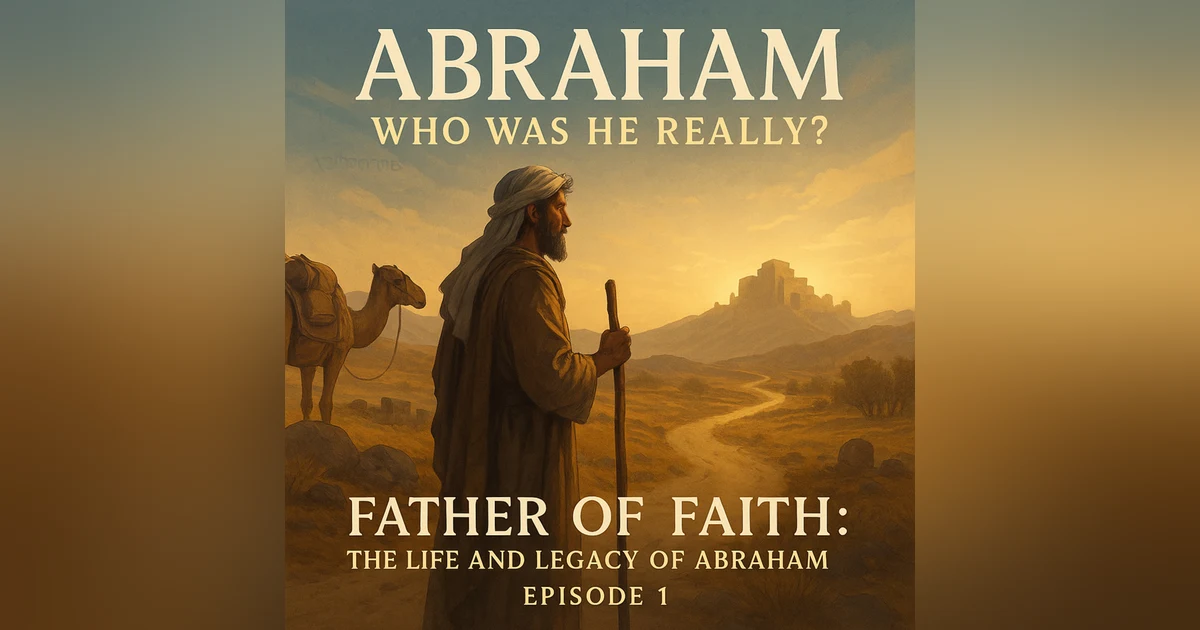
Father of Faith: The Life and Legacy of Abraham – Episode 1
Before he was the father of nations, Abraham was just a man from an idol-worshiping city in Mesopotamia. In this episode, we trace his early life—from Ur to Haran to Canaan. We explore where he came from, why he was called, and how he responded. Was Abraham just a nomad with faith—or a bold witness to Yahweh in hostile territory?
We dig into the historical and archaeological background of Ur, the journey through ancient Mesopotamia, and what it meant to build altars in Canaan. We also address the common question: was Abraham an Arab? And what does it mean that he “called on the name of the Lord”?
This episode sets the foundation for understanding Abraham’s legacy—and how his faith journey mirrors our own.
Find our videocast here: https://youtu.be/2P0o4yuzPOE
Merch here: https://take-2-podcast.printify.me/
Music from #Uppbeat (free for Creators!):
https://uppbeat.io/t/reakt-music/deep-stone
License code: 2QZOZ2YHZ5UTE7C8
Find more Take 2 Theology content at http://www.take2theology.com
0:00 Showing off the threads. I like it. Trying to get this as a flat of a. Oh yeah. But maybe I can move. I don't know if that's good or not. But yeah, so man, I just, I don't know what happened. The muse, the the inspiration came over me and I designed this great shirt and man, I think it came out really well. All right, easy. Well, we'll let the audience decide if you like the shirt. I'll tell you the real story. If you don't like the shirt. Yeah, Michael, definitely. But but but we talked a lot about bout Acts 242 and Word fellowship, worship, prayer and you know, got a little got the little side Take 2 logo on They're on the back.
0:45 You have the whole verse Acts 242. So I think it's a great, great shirt that captures, you know. So this was your brainchild or Lee Ann's? Mine I saw a shirt that kind of looked like that and it said something like I really like the shirt. It said like contexts. I don't know. It said something that resonated with me and I was like, oh, and it was like we then we were doing the podcast. I don't know when I thought about this but I was like, oh it like. And so did you put this in Canva? And I put it in Canva. Yeah, you did it. Yeah, yeah. Yeah. Not Liam. Oh yeah. Yeah, I put this in Canva, Yeah. I'm impressed, I'm impressed. And yeah, this is actually Zach's, Zach's design. So it. Took me not a long time but I was scrolling through, I was trying to find a font that was like I don't like distressed but I went through a lot. Canva has a lot of fonts.
1:31 I went through probably like 15 or 20 distressed font like they have like a whole category of distressed fonts. Explaining on that SO. So this is in the merch store. In the merch. Store so if you're an A member or in a tender of CBC this is going to be a required shirt for you you got to go out and buy it but and if you're a regular listener you know you should should wear it and you know this is what the this is what we believe the church at its core is should be about so I. Love it. Yeah, I'm, I'm excited to yeah, wear, wear this around, see if see if it catches on a little bit, but I like it updating the merch store. So yeah, also people have good ideas. I think we're always, always open to throwing something in the.
2:13 Yeah, my interview with Brian Coles, Jared. And we had an idea for merch there, you know, 'cause he lost one of his legs. I said instead of take two, take one. So. Oh. Man, yeah, I just, I, I recently listened to those 'cause I guess last week the. Second one dropped. Second one dropped last week. And so I've just listened to the last couple weeks, man. It was man, yeah, man, it was really cool hearing his, his testimony and his, you know, attitude and all all these things throughout. What a what a crazy, crazy. But he was saying like on there, like, you know, everyone in his county or city, like, we'll be making this won't happen.
2:55 It's like word spreads. And right, it was like, wow, 'cause they're, they're probably a, well, they're a well known farming family in that area. So everyone would have known. Did you hear what happened to Brian? You hear what happened to Brian? And they're like, OK, we can't do that anymore. Yeah, yeah, and it's amazing how God has uses. I always love was I don't I it's funny. I don't know Brian, but I kind of feel like I do after, you know, a couple and then was, you know, you know the voice. I like always recognize now you know. So it's great you guys grew up together. I mean like like paint a picture. You guys were like. I first met Brian. He was dressed up like a toy soldier with a top hat because the church, it was not my church at that time, but that, but it became my church in the 7th grade that they would do what they called his kids and they would drive a bus to both Bald Mob and Augusta schools because the church is like in between those two schools.
3:49 And they would grab mainly kids from their church. But it was, it was an evangelistic thing too. And I got permission to go. So I started going and we would do these plays. It was real. I mean, there was a time when it was really well done. Jill's mom kind of spearheaded that and we would put on a play and stuff. And so he was, he was one of the older guys in there when I was one of the younger guys. OK, that's what I was wondering like. He's about five years older than. Me. Oh, cool. That is really, really neat, man. Those are the days. I remember Cokeman Church and it was just very evangelist bus ministry. Huge, huge. We would have so many. I don't think it this is does not age well when you call people bus kids like that doesn't like we picked up the bus kids. Not, not not in today's culture, but man, we had a lot of people involved in Awana that you could. And when I worked in a in college, worked in this camp in Hawaii, it would be like, all right, two hours until VBS starts.
4:47 Let's drive around like, Hey kid, you want to go to VBS And like it was a huge evangelistic outward and it was like, OK, it wasn't creepy or weird. It was like we would talk to parent. I'd be like great, go and it you know, you could go knock on doors. I don't know. We would canvas so much and like we would actually have a lot of people at BB s s I think. There was like a cultural familiarity with BBS that was watching. The neighborhood, right? Yeah. Oh yeah, VBS, yeah. Oh, you. Wanted that church. Oh yeah. And this church does it the next week and it was like all the kids like went to things. It was it was. I was talking about this with Leanne. Like, just like we like had the like skits like you, you had this big production like we'd have like these skits that were like, maybe I was just funny as a kid or as a teenager you were involved in them.
5:32 And it was like in the youth group, like you were really involved on the girls or the boys or whatever. And we like to cheer. I don't know. It was like it, it was kind of almost like camping, not really camping. Did you have? Any evangelistic chess type stuff that you were doing? Yeah, with that. That's where the knife thrower guy was at though. That I've the chains before or is that the same guy? We had the whip, the chains. But he didn't. Have change. No change. There's a knife thrower with guy that was one one year, but it was like this huge deal. We we did the ours was like, I don't know if it was like 9 to 12. It was like a day thing, morning thing maybe, but it was a big, a big deal. And I just got I get nostalgic for that, you know, sometimes it was like it was like really fun being involved in these things and like all the teachers would like really dress up their classrooms. I don't know.
6:21 It was like a thing, but I think it was like maybe more of a cultural. There's a different time, you know, Simple time. Yeah, well, we're doing Bible camp VBS our our church this week as we're recording. It's great and and honestly, the sanctuary looks great, like it looks really nice. Yeah, that's good. Yeah, I think they yeah, it's good. I've seen that go, that pendulum go where it's like everything is decorated and it's kind of like, wow, OK. Are we about the decorations you know? Yeah, Yeah, yeah, yeah. Finding, finding that that that. Happy to meet him. Yeah, that's. Good. It's great. It's always. It's a lot of work. Someone's got to put that up and then take it. Down I know it is it is a lot of work love Jack White just talking about I just great all the puns and he's just so he he he just does amazing amazing job.
7:11 I was hoping you would like dress up like Abraham and do this like Jack White esque, like give all these you know. What does Abraham look like? How do you dress up like Abraham? That's true. It'd be hard. It would be hard to dress up like, but like a patriarch and be able to like meaningfully tell the difference, like for sure, you know? Yeah, I'm. I'm clearly Isaac and not yeah, you know. How could you ever think this is Abraham, this is Isaac? See the See the blood on my neck? Yeah, I guess you would have to you have to like do a specific story to really get the get the difference, like really nail, nail it down. But yeah, our pastor Joel started a new sermon series on Abraham, and Michael had this great idea to, like, answer some of these off the beaten path. Not off the beaten path, but you hear about these things. But do you know about these things right? Yeah.
8:02 And I thought we could do like just something we did on finance. We covered a lot of topics that weren't necessarily what he covered, but they were on finances as he was covering them. But so, well, we've been playing with some technology issues. So you may notice on some of our ones that the audio goes bad, not bad, but a little bit not as good. And then it comes back. Well, we sometimes we look over and what we use to record our audio felon falls out. So that just happened. So we were in the middle of talking about a lot of VBS and Abraham and I'll splices together. And but we don't know exactly where it went bad or, you know, so maybe we maybe maybe there's enough for the good audio that we just go right, right in.
8:47 But our pastor is starting a series in on Abraham. And by the time this airs, he'll probably be two or three into it. But we thought we might, you know, do like we did with finances, just cover some things that he probably won't cover. Or maybe we'll cover them in from a different vantage point. But really wanted to ask who is Abraham and where'd he come from? Where'd he go? It's kind of like Cotton Eye Joe, you know there. You go, I, I, I'm pumped for this because I think you know it. It just helps give that context that you've everyone turned Abraham, but you probably haven't thought through all these things totally. So let's jump into it. Take it to the next level from the hearts of the Low Country in South Carolina. It's the Take Two podcast where we take theology to the next level.
9:41 Father Abraham. Father Abraham. Had many children. Man, make it, make it, make it inclusive. That's good, because then you have to say Father Abraham had many sons and daughters. It just it doesn't roll off the tongue quite as good. But if you, if you're a student of your the word, you'll know he came from ER, and we know which ER, ER, the Chaldeans. Boom. Yeah, not. Just any ER, yeah, not just any ER. That's so funny. It's like you don't run across a lot of two letter places that often, you know, just like stands out. Yeah, well, there's also I. I Oh yeah. Where, you know, they lost 36 people and they're like God's turn from us.
10:25 I'm like, you know what I'm talking about. Like after they. Fight. Yeah, Joshua. Yeah, after they fight Jericho. Yeah, and that guy. I, I, I feel like I always say AI just because it's easy. It's easy. It's like just so people don't lose the. I think I is probably the right way to say. It I don't know. I always think of Alan Iverson too. Such AI. I.e. AI don't, Yeah, who who knows, but he came from ER and I think I remember hearing about this when I was younger, that there are two proposed locations where this ER could have been. There is a southern ER which would be by modern day I'll let you say this the city and around since I had to read all those names.
11:08 And payback I cannot. Nasir. Yeah. Nasiria. I like that. Yeah, looks right by the heart, by the Euphrates, the where ancient summer would be, where the Samaritans would come from. And that seems to make the most sense. There is a northern city called Irfa. Irfa and it's near modern day border of Syria and Turkey which would be more more northern and actually closer to Haran where they stop. Oh, yeah. Yeah, yeah, yeah. So some scholars make some some plays for that that because it makes it doesn't necessarily make sense if you're going well this direction that you would go so far north and then come over.
11:52 Oh right yeah, like why would Yeah, I. Got you. But if you're just doing that, maybe it makes more sense on the past. Iran was as far as his father got. Is that the? Yeah. Yeah. Tara died at Haran. You gotcha? Yeah. Do you remember doing the walkthrough though? Were you there at the? I, I was at the, I was just, I didn't go to that. Oh, you just like I'm too good for this. Yeah, I actually, I, I showed up and I was like, I'm too good for this and walked out. Made a big deal about it now. But there was a place, you know, Tara died. You know, you kind of, you know, that's where Tara. Died, yeah. But there is, well, we'll say this in Southern Earth fits a lot of motifs of, you know, if it's a biblical mention of the Chaldeans, it's a major urban city of worship of not Nana.
12:38 Nana. The moon God. But we it is anachronistic because the Chaldeans, even at the time of when Moses would have been writing this down, weren't there yet. Gotcha. So some people are like, why did Moses call this ur the Chaldeans? And then there's speculation. Well, some people say, well, just because our history books and you know, the the book of Genesis is a history book and you should look at it as a primary source document. And so you should say, yeah, the Chaldeans were there. Maybe this book didn't know about them, you know, but this is this is evidence that they were there.
13:21 You're just discounting it because it's the Bible, but then other people are like, well, maybe an editor came in later and added that so that you would distinguish because they knew there were two different cities with IRFA that were were close. Regardless, we know that he came from ER and probably the southern ER is the. That's great. We're thinking Iraq is what you should be thinking, most likely. I like that. Yeah, but the southern port portion of today's Iraq, but where the Sumerian people would have been from. So it wouldn't be like if you're picturing present day Iraqis, it's probably not the right race. Just only geographically, but not peoples. Yeah, yeah, yeah.
14:04 That, that that's good, good distinction. We'll maybe talk a little bit down the road more about this people distinction because it is hard. You're trying to contextualize a modern day, but you don't get the wrong idea and run with that too far. So Genesis 1131 says Tara took Abraham his son to go to the land of Canaan, but when they came when they came to Haran, they settled there. So they they stop off there a little bit. Joshua 224 two also says Tara lived beyond the river and they served other gods there. So just some context of what's going on so. There was this big turning point. He was like instinct in one sort of religious culture. What I liked about pastor's notes and they were like the color notes last Sunday. It's like we spent the money, you know, I. Guess he wanted that mapped or or or maybe he did it and didn't know.
14:51 It was like, oh, I guess we're getting. I guess we're getting color and, and it had kind of his route on there. And I'm always fascinated by this stuff 'cause I, I am not great at geography. It always helps me, you know, to see this. And then you always, and I know you maybe can't nail down stuff like perfectly, but you, you always do wonder like why they take this route or go this way or you know, these things. But I like that we're going to map out Abraham's journey. Try to contextualize that a little bit. Yeah. So they're going to start down in southern Iraq near the Euphrates River Valley, and that's past Babylon. So it's it's, it's lower, it's more southern than Babylon. And then maybe we could get that map and I can get that and and put it up here for people to see and. It's almost like they're going up the like they're like kind of tracking with the river kind.
15:37 Of and that kind of makes sense, that's what. That's what I would do. Yeah, like let's just because the river is life in the desert, so you're going to stay close to the river and then cut over. So and you never know, there may have been, you know, cultural or political reasons to stay close to the people. Like maybe like we know these people are abandoned. That's a good point, living here. So we're going to kind of stay close to our country and then cut over. Maybe God just let them that way. Yeah, yeah, it's hard. It's at some point speculation, can't put too much into it, but it's at least plausible. Like that seems like a good, good way to go. So they're so Iraq working up this this river and they. Basically going to cross over to present day Syria, probably Syria back then, and then almost as north as where present day Turkey is. So you're thinking like if you can picture this map, you know, they're going up to kind of close to present day Turkey and then they're going to come back down maybe, you know, to just slightly east of like Damascus, Lebanon, and then down into what we they would call Canaan at that time. That's great.
16:40 So if you're putting miles on this earth to Haran, 1000 miles. So it ain't nothing, ain't nothing to sneeze that there. It's like on a map. You're like, oh, they went here to hear, then here to hear. Like actually this was this was quite the quite the journey. And then another 400 miles Harin to Hebron. Yeah. Gotcha. OK, yeah. And so modern day countries, Iraq, Syria, Turkey, Lebanon and then down into Israel AKA Palestine thinking chat for throwing Palestine in there. And so in the ancient times, that would be summer or where we get the Sumerians, not not the Sumerians. Oh yeah, yeah. Not not the Good Samaritan, that.
17:21 Not those. Oh, gotcha. Yeah, that's a good distinction. Yeah. Not the same. Yeah. Then Akkad. This morgid Akkadians like Akkadian language and this some of this ancient stuff. Mari, I, I don't know Aram and then finally into to Canaan. Right. And you know, you look at this, you you alluded this some like there might have been banned into Raiders, but you think about contextualizing it again, they're going to run into wild animals. And I don't know if you've ever looked this up to you probably know this, but you know, back back in ancient time, the the animal landscape a little bit different in the Middle East too. I don't know if you've looked at this before, but it's kind of interesting. I haven't with things like lions and these they were all over like you. Well, you read like, you know, even in, you know, Dave, David's killing the lions and where he's at. Salman.
18:05 Says the lazy person, says, oh, there's a lion in the street. And I'm like, I guess you would have to be lazy because there are no lions around here for us, you know what I'm saying? Yeah, yeah. And it is crazy. And you look and there's the lion population has declined a lot, at least in like Jerusalem and things like with all the you don't see as many lions there. But it's I was looking at this like, oh, I wonder how many lions? But I was looking at this one time and they're, you know, I guess less people and all these things running around. I'm glad that chats got snakes. Snakes as a danger, maybe as a companion, you never know. No, no. Tribal skirmishes kind of mentioned that, you know they're coming through places that could be hostile. And Abraham does get into some skirmishes from time to.
18:47 Time he does, and he seems a little skittish about skirmishes. Yeah, yeah. You know, he had his had his fair, fair share. So he probably knows what's up. Walking through some desert areas, water could be scarce. So yeah, maybe you got to cling to the river for that kind of stuff. And then you just mentioned all these different cultures. You know, there's got to be these language barriers, culture barriers. Yeah, it's hard, you know, for us and our our times. It's especially Americans, where the United States is so big and almost everyone speaks English here. There's not a huge compelling need to learn a second language. And that's evident that most of us don't learn a second language.
19:29 But you wonder how many languages did Abram? No, did. Was he a metropolitan guy who, you know, knew how to speak? More businessman? Yeah, maybe he, you know how to figure some of that out, that that's a good point that we probably don't think about enough. And then, you know, everyone's got their little God they worship or whatever, right. So you're setting up these altars here and there. It might. It might be like you're set making a statement. Yeah, that that that. I think when you do that, because he's going through land that's not even his, he's like, I'm going to build an altar to a different God right here that you maybe not recognize so. Nana can take this. And that's right. That's right. Yeah, I like it.
20:10 So we see Abraham is called one. Could you read Genesis 12 one through 3 for us? Great. Yeah, let me. Yeah, you'll have to look it up. Oh, oh, I'm not trying to call you out. I thought maybe you. Michael brought his Bible everyone and I didn't. No, no, I can I can get to it and look. Yeah, I'll read it. See you're the good. What you could be doing is your notes had the the scripture pre printed. So that's that's a that's a bonus where my notes didn't have it. All right, So let me get there to it. It says now the Lord said to Abram, go forth from your country and from your relatives and from your father's house to the land, which I will show you and I will make you a great nation and I will bless you and I will make your name great and you so you shall be a blessing and I will bless those who bless you and and the one who curses you, I will curse. And then you, all the families of the earth will be blessed. So really first little hint of the Abrahamic covenant, not a hint, the first statement of it.
21:11 And it will get stated again in 15 and 18 and maybe 21. I think it goes every three chapters like that. But I know 15 and 18 for sure. So he's a. Great guy He he was just doing so good. He's like Abraham. I like what you're doing here. It is pretty amazing that we've read just a little bit earlier in Joshua 24, two, that his families weren't seeking out Yahweh. Yeah. You know, they were worshipping idols. It was. Yeah. So I I I love that word. You can't point to ask what scripture tells that he's doing all these great things. And so I'm picking you. And how I wonder if it was the Angel of the Lord that appeared to him? Like what? What was it?
21:52 Just a still small voice inside his you. Know, I know. Yeah, that. I think it had to be more than. That you you would think to abandon everything you would think. Yeah. It would be this. We don't. We're not told explicitly. We're told in Hebrews that he had faith in something that God told him. We don't know, you know, to do this. And he obeyed. Yeah, and I love. I pulled up Hebrews 11/8. It was by faith that Abraham obeyed when God called him to leave home and go to another land that God would give him as his inheritance. He went without knowing where he was going. So that that I mean that is faith right there. Right. So maybe that explains why they went so far north They're. Just yeah, yeah. Because he's like, I don't know, you know, we're just following. We'll see what where God, you know, calls us. One point that I did want to bring out that I thought was very interesting that Joel mentioned was, was Abraham an evangelist?
22:42 Yeah, the verbiage. That's interesting. Yeah, very interesting. We read Genesis 12/8. I'll read that one says. Then he Abram proceeded from there to the mountains on the east of Bethel and pitched his tent and Bethel on the West End. AI well, there we go on the east and there he built an author altar to the Lord and called upon the name of the Lord. So you're just reading this in English, and you're probably thinking he's just praying he's, you know, maybe asking for help or something. Yeah. Just call on the name of the Lord. You just call on the name of the Lord, but that verb, while it can have that that meaning, it can't. It can also mean and.
23:27 Probably better translation would be proclaiming the name of the. Lord, that is that it, that I've never really paid a lot of attention to that, but I was glad that this was in our notes and you've got this. What corroborates is this Genesis 4 passage you have. Yeah, Genesis 426 says the men. Then men begin to call upon the name of the Lord. And we, you know, I've always like, oh, is that the first time they ever prayed? Yeah, yeah, yeah, right. You might just think that and you're like, oh, it's probably more significant. Right. They're probably publicly worshipping or proclaiming the name of the Lord. Scholars like Bruce Walkie, Walter Kaiser, they say that this is more of a public proclamation than a private prayer. Dude, Bruce Waukee, he's my guy.
24:13 He's the guy for Psalms and Proverbs and man, I wasn't him. If he's he, he knows his Hebrew very, very well. And this is the kind of stuff we, I mean, there needs to be like a revamped the translation that is like the NESP or the ESP. But like even our translations, they they want to hold on to tradition so much because it's so ingrained in the. Culture, it's a business. They got to make money. That's right, yeah. But you know, the joy of the Lord is my Yeah, right. We talked about that. You know, we got to, we got to get better. It's so interesting because it's like that does like this is. Jesus, this is pretty big. Joseph and Mary going to an inn. Upper room.
24:55 It's like honestly it would it's it would make sermons a lot shorter so you don't have to. You wouldn't have to explain as much. But yeah, it's like why it's so funny because like half of like if you were listening to like a KJV preacher and you've got like, and if you're like half the sermons gone already because you're trying to explain something that's right here in my text, it's great. Anyway, carry on all. Right, So if you can just envision this, this guy from a foreign country coming into your country, and especially if you are beholden to, you know, Baal or some of these other gods that you worship. And remember, you know, you can go back and listen to our podcast on the Nephilim and, and those the, the gods and the demons that we think that we're there.
25:42 How it was very geographical, like this is the God of this area. And now Abraham is planting along the way these altars to Yahweh, and he's preaching Yahweh's name, and he's a foreigner. That seems like an evangelist. Yeah. Proclaiming that that is a big deal. And like he's like, I don't know where I'm going, but God, you know, the God Yahweh is, is. Yeah. That that's like in your face telling everyone, especially if you interpret this as proclaiming the name of the Lord more than I'm just talking to God. It's like, man, I'm proclaiming that that that brings a lot more color to the story. All right, So the next thing you know, these are just the number of questions that I personally had that I was like 1 to look up and get answers to because I always have heard perhaps Tara failed and stopping at Haran.
26:33 I don't know. What do you think? I, I don't know too. Whenever I, whenever I hear teaching on this, I hear that a lot. And then I look at the text and I think that very well may have happened and I can't. I I don't know Is there some way the text is like? How old was he when he died? Like maybe he's like, I got to stop here because I can't go we. Just did 1000 miles like it's it's just. It's not. Like he was like I did 20 miles in a mile. Like there was some obedience there, but it does what what's, what's the way it's written? Is it written in a negative way? Is that why people say it? Or is there like this connotation? Because I feel like people say that a lot. Yeah, let me read Genesis 1131. It says Tara took Abram, his son, and Lot, the son of her on. So it would be his brother, right? His grandson.
27:25 And wait a minute, I'm getting confused here, but let me just finish reading. And Sarai or Sarah, his daughter-in-law, his son Abraham's wife. And they went out together from Ur of the Chaldeans in order to enter the land of Canaan. And they went as far as Haran and settled. By they went for Canaan made. It settled. Iran. So that makes sense. They knew the goal and they didn't make it to the goal. So that OK, that does make sense. Why do we make it? The days of Tara were 205 years, and Tara died in Haran. I mean, he's lived a long life. Yeah, that, that's because, because really Abraham, I mean, is it just as 12?
28:07 Is Abraham like 75? What are we talking like? Yeah, Tara lived 70 years and became the father of Abram, Nahor and Haran. And then Lot is the son of Haran. So Lot is Abraham's nephew, Tara's grandson, and they're going to name the city where they stop after Tara's father or grandfather, Haran. This note is really good to hear. Haran was a key worship Center for the moon. God, sin or sign. Tara may have returned. I could see that being OK. I know, Nana. Yeah. It's like it's moon God worship, you know? It's like, you know, pretend.
28:49 Not that we you can say that for sure, but you can see maybe there were. Distractions of sorts, Yeah. All right. And this is another question you know was bringing lot a mistake. Yeah, because it doesn't seem like a lot of great things happened. Hebrews 11 does list a lot in the faith chapter, yeah, but there are complications. Lots wife in the page, Chapter 2. Lots wife, I'm just. Kidding. Yikes. No, I think that's where we get most of that salt that we get, you know the the red colored salt today. You know what? You know how like on the salt shakers got like that umbrella person? Yeah, Morton. 'S why don't yeah why don't we have turning back salt to wife that that that's $1,000,000 idea we should make lots wife's salt like a.
29:37 Friend like the the brand name? Yeah, like. Turn back. I don't know what the word would be, but you know something. Yeah, you know the hit the story behind Morton's salt. What's the story behind it? Well, the salt before then, but however it was processed, it would clump really bad when it was high humidity and you see her holding her umbrella in the rain and the salt still pouring. So that they, they formulated it in a way I don't know if they like coated in silica or like, you know, just a tiny trace amounts of something so that it flows even while it's raining and humid out there. Man, I'm trying to think of there's something there with like puns on Sodom and Gomorrah. There's something about this. I don't know what it is. But future, future banter. Yeah, there we go.
30:19 But you're right, it wasn't like, oh, a lot appeared. Everything's great. It's like bad things happened a lot. Well, 12/1 specifically says go from your country and from your relatives and from your father's house. Yeah, so, but is that just like, well, that just means leave all the people that you know and leave you can take some people with you because obviously he had servants and stuff that, you know, his employee. Employees would be another way of saying that in the days. But we see, you know, lots herdsmen and 13 are going to fight with Abraham's herdsmen. So they're going to like, OK, you go over there, I'll go over there. Obviously the Sodom and Gomorrah disaster with Lot.
30:59 And Lot was like, was Lot the one that was taken by these? Like Abraham had to go, like, rescue him too. So on top of that, he's like, come on, hot. We're getting fat. I was like, come on. Help me out, man. That's what introduces us to Melchizedek, because Abraham takes his portion and gives it to Melchizedek. You know, that's true, Salem. So maybe. Yeah, that's all good. And the name a lot, lot. I just, it's, it's bland, you know? Yeah. Like unlike the salt. There's there's more stuff. There. I keep coming back to that anyway. That's good. That's good. All right, We're just answering some random questions like who is, who is Abraham? So here's another random question. The land of Canaan, what did Abraham find there? And so, you know, in our current political culture, yeah, everyone's wanting to call it Palestine.
31:43 Yeah. That. And I have no dislike for the people of Palestine, that they're actually in a hard plight because it's tough. None of the Arab countries around them will take any of the Palestinians. You know, there's you go. Look at the border wall between Egypt and Palestine. That's a border, you know, Saudi Arabia. But So what I'm about to say, don't This is not at them specifically, but Palestine is named for the Philistines. Yeah, which is? The arch enemy of the Israelites, right? And the Philistines are probably Whitey's of some some sort because they came by boat, they're seafarers. So where did they come from?
32:24 Greece or somewhere? We don't know exactly. Yeah, right. However it. So they're they that name Palestine really has no lineage to the, you know, the Palestinian million people that are there today. What? Happened is insane. Yeah, after 70 AD, when Rome was like, we're just done with the Jews. We're we're destroying them or wiping off the map. And I'm going to name this place Palestine, which was like the transliterate, literate transliteration of the, you know, Philistine, Philistine. So yeah, anyways. Not it was not a compliment. I was trying to look at who. Oh yeah, Hadrian. That was it. Hadrian was like, I'm calling this place Palestine because Jews aren't going to like this. And it is, it is a complicated thing. My I was looking this up to.
33:09 Do I have the timing wrong? Is it this? When did that? When did that? I just looked. At this the Romans officially renamed the region Palestine in one 3580 after the bar Copa revolt this Jewish upper area it's a. Little later than what I. Said Emperor Hadrian intentionally chose this name to erase Jewish identity from the land to humiliate the Jews. So it was very on on purpose. And you're right, it's so, so complicated. I was reading the stat. I want to pull this up. This is not the podcast, but in 1940, 10% of Palestinian population Christian like it's it's the highest concentration of Christians in the Middle East is Palestine.
33:50 Yeah, yeah. Makes the whole situation very complicated. Right, right. Yeah. And I, you know, I've been told that there are Palestinian Christians who love the Jewish people. Yeah. And believe me, we're not saying that the current day citizens of Israel are the best people. Sure, right. Yeah, yeah, yeah. So I'm not saying they're bad either. I'm just we're not weighing in on that. We know that there are tensions between the current, some of the current Jewish people there, the the Israelites and the Palestinians. But, you know, there are Palestinian Christians who would say Jesus is a Jew. I follow Jesus.
34:34 He is Mashiach, the Messiah. And we look forward to a day when he's going to come back and he's going to set the world right and he's going to land right over here in Jerusalem. And yet we have tension between us. You know, we're, we're, we're, you know, not, not fully reconciled. Yeah, it is so insane and Disinsanity did not start today. It was. It was like way back, you know, Abrams walking in. And it's not just like, oh, here's a bunch of acreage for free. Right. Yeah, yeah. As, as is every, Yeah. New start, you know, almost almost every new start. You know, maybe the original walkers over the side the Alaskan land bridge found a whole bunch of land that no one was at. But because Genesis does record in chapter 12, at that time the Canaanites were in the land.
35:22 So we know from Scripture right there, Flash 4, Genesis 15, like, you know, 400 years down the road or whenever all this will come to fruition is because the iniquity of the Amorites is not yet complete. Yeah, and it's like God is going to prove to them how bad you are. I'm going to let you prove to you how bad you are because I'm going to wipe you out. But I'm going to give you a chance as repent and you're not going to. And you know, I think I've hinted at this before, but I listened to this historian, I think it was Peter Kraft, Kraft KREFT, he wrote a book about his God, a moral monster. And he goes through the culture of the Canaanites and some of the laws that they had on the books.
36:06 And and the law, I'll just say you, you could not, there was a law that you could not mate with an ox because you don't want the ox to gore people because they've become habituated to mate with you. But you could mate with other animals. OK. So yeah, I'm just saying that paired up with all the child sacrifice, it was not a safe place for people. Man. Young girls being sold into, you know, basically sex trafficking, you know, so just a culture that you is as almost as bad as you can imagine it for sexual debauchery, child sacrifice, Pagan idol worship and stuff.
36:48 Yeah, it's not like they were like cleaning litter from the side of the road. It's, it's like we're we're just helping everything because I think sometimes you're like, how could this happen? And it's like, well, I think I I love that that detail is in there saying, hey, iniquities not yet complete. Like, hey, they're doing their own thing. Like, you know, giving them over to what they want. You know they're bringing judgment on themselves. So he comes into this land, there's Canaanites, parasites, Hivites, Jebusites, and and wouldn't. It be nice if it was like Canaanites, parasites, hivites like Arjun like there's not AI like just throw it in there to like. A Stan or something? Yeah, something just random.
37:29 Yeah, yeah. All right. So these altars that he, we kind of already talked about this, he's kind of like making territory for Yahweh in this foreign land. And we've got one at Shechem, one at Bethel, one of one at Hebron, one at Beersheba, Genesis 12/12/13 and 21 kind of documents this for us. And they weren't just those places of worship. They were also, you know, he's always coming to to reign here. If you think of the the the council and the different people that are pointed, you know, kind of plays into that. Yeah, that that's that's pretty, pretty amazing. I like that each altar followed a divine encounter.
38:12 This covenant moment. It's it's these significant events and Abraham's like, man, I just got to set this place up. Yeah. All right. Last question I had was researching the ethnicity of Abraham. We've already kind of mentioned this a little bit. I talked about it. He's he's not Arab. Because I think this is confusing because, you know, Abraham's Judaism, Christian Islam, like, you know, Arabs will be like, hey, I look to Abraham or I look to Ishmael, but you know, so you see that it's connected, but he was not. I think this is. Yeah. He wasn't from the Arabian Peninsula or, you know, have the, you know, we're just talking about, you know, just different physical characteristics. From what I understand from Sumar, as a Semite descendant of Shem, he would have had, you know, more of what we would might consider Iran.
39:02 He'd look more like someone. From Iran, Yeah, yeah, yeah. Yeah, the lighter skin, the kind of the Persian look, you know, the Medes and the Persian Persians and not more like the what we would consider like present day Iraqi or Saudi Arabian type of type of look just for ethnicity. Yeah. Yeah, that that that's really good linguistically and ethnically, E Semitic closer to this Acadian Sumerian culture, which is I think hard to identify. It's it's hard. But I think I think when you put it in that like the terms you just did Arab versus like Iraqi or something like or like you know from Iran, like it kind of like paints at least some, some picture not British, not British, not.
39:46 Irish, not Scandinavian, but you know also not, you know, Northern Africa or Arab, you know, distinct culture. Gives gives at least a little bit to to to think about because it's it's so confusing in the today's world geography and thinking tracing back to that. So I think that that's really helpful. Yeah. All right. Well, this is our first podcast on Abraham. Hopefully some questions and we just kind of doing a biography of of him and we'll get into some more theologically dense things. But hopefully this answers some questions, help you think about who he really was and kind of put them in in history and and Abraham lived we I guess we should have answered this 500 years ago, thousand years ago. So it's actually around 2000 BC.
40:38 Yeah, yeah, yeah, yeah. I think, you know, it's hard to remember all the dates, but I like how a lot of these major Bible characters you can put at these like 5 like these. I think actually closer to 19, but you. Can, but yeah, yeah, yeah. You can say 2000 years before Christ ish. Yeah, yeah, yeah, that. And then Moses is going to be around 15, but it's actually like closer to 1450, you know, 1430 before Christ. Now I like it. That is really helpful because man, it's just you think of all these Bible carriers, you can like smush them all together and it's like, oh, you're missing how everything kind of unfolds. But I like this. This is great. All right. Anything else? That's all I've got. All right, that's our take. Thanks for listening to Take Two. Find us wherever you find podcasts and on YouTube for those who want to watch our video cast.

