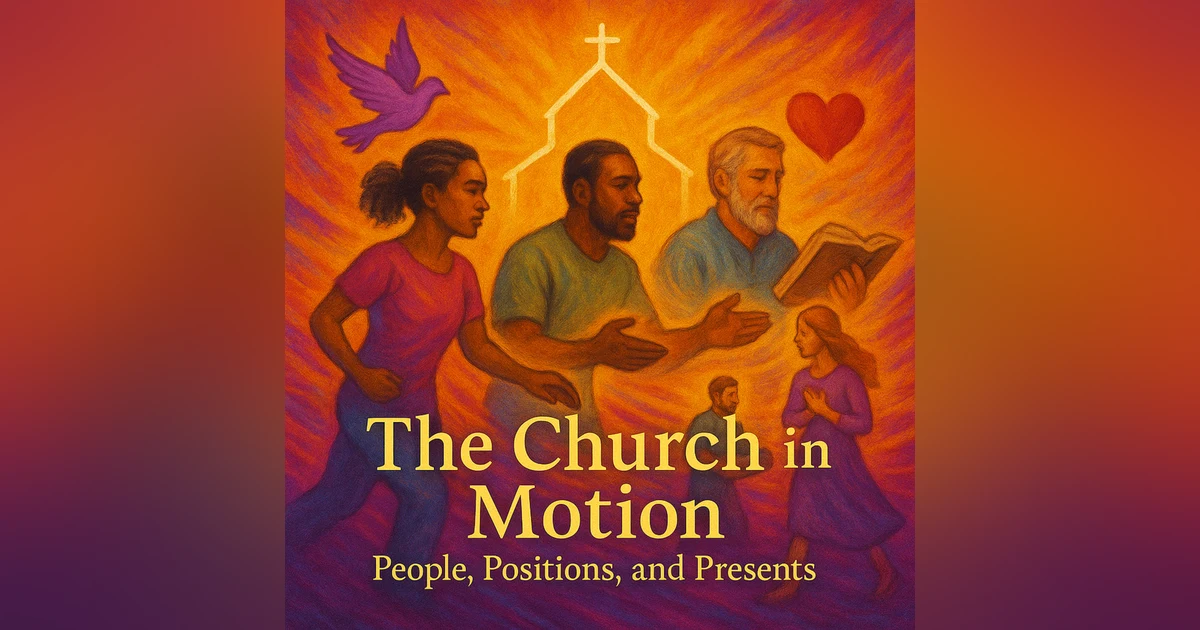
The Church in Motion – People, Positions, and Presents


 RSS Feed
Episode 2.14
The church isn’t a building or a brand—it’s a people on mission, empowered by God and equipped with spiritual gifts. In the final episode of our series on biblical church ministry, we turn our focus to the people who make up the body of Christ.
We explore what Scripture teaches about the universal church and the local church, the ongoing roles of elders and deacons, and the unique, Spirit-empowered gifts given to every believer. From leadership to service, teaching to encouragement, every part matters—and every person is placed by God for a purpose.
Whether you're a pastor, a new Christian, or somewhere in between, this episode challenges you to consider how God has shaped and gifted you for the good of the church and the glory of Christ.
Find our videocast here: https://youtu.be/LswK8pJt5Gk
Merch here: https://take-2-podcast.printify.me/
Music from #Uppbeat (free for Creators!):
https://uppbeat.io/t/reakt-music/deep-stone
License code: 2QZOZ2YHZ5UTE7C8
Find more Take 2 Theology content at http://www.take2theology.com
0:00 Had any chips recently? Aw man, talking about Lays some Doritos. Oh no. No I'm talking about these potatoes that are cut up into these long strips cause yesterday after church went to the codfather. OK. Yeah, you had some. Fish and chips. Man, you know what I love? You know, England great, United Kingdom's great, Canada's great, but man, did they say something's wrong? Because really everything should be based around the mid South of like Memphis and Little Rock and and Bald Knob. Coke and Coke all day. You just, yeah, exactly. It's Coke all day. That's a big one for that region, right? It's not soda, not pop Coke, yeah, man.
0:43 But these other countries, man, it just is like mind blowing. Yeah, they do have some weird words. I, I think I've read that technology that was kind of invented after, you know, the, you know, the British Empire kind of broke up. That's where you see these English dialects starting to diverge in some of their words. So you know you got some differences here, like a flashlight. Oh yeah, they say like a torch. Torch, That's right. Yeah, Yeah. Will you line up for something? Yeah. They're queuing. Up. Yeah, queuing up. Man, just getting a line. Don't be so fancy about it if you're pinky in the air, England. Maybe a for British, you know, you, you have a diaper for a little baby, Yeah.
1:29 What do they call it? Nappy. Oh, I don't like that I'm nappy. Too close to nap. I like naps too much. Do you ever live in an apartment? Oh yeah, yeah. Yeah, or a flat. Oh flat at my apartment going to school. MUSC downtown Charleston. Lived at B street flats. Maybe a play on words there? One things that we used, there were some German spies who tried to infiltrate American troops and they were talking about trucks and stuff or they were, they were like down there blending in. Then they called, you know, a big heavy truck that you would move stuff with a lorry. And they're like, you're not American if you said Lori.
2:12 And they, they, they found. Out. Yeah, yeah, like that's like that's like we know you are not one of us. That's great here's one in Canada they don't call it Mac and cheese. Have you heard this? I see I have not heard this. I some this Canadian thing came up and I was like what they call it a craft dinner. Craft dinner. Yeah, and they're. And they're like, they're like, it says it on the box craft dinner. And I'm like, it's Mac and cheese, I think. The people of Maine should rise up and fix this. We need to talk to Leanne's. Yeah. We're Yeah, the middle men. Yeah. You can go up there. Just tell these people. This one blew my mind. Colored pencils. Do you know what they call colored pencils? No. They call them. They call them colored crayons. Colored crayons. And it's not a crayon. Colored crayon.
2:52 All crayons are colored by definition. It is this. Is this is the result of Trudeau being there for too long? This isn't what happens, man. A chicken sandwich. Chicken burger. A chicken burger. Chicken burger because they say it's got a burger bun. Anything with a burger, they're like, oh, it'd be a chicken sandwich if it was like bread. Yeah. Yeah, they're like chicken burger. Yeah, see, you've heard this one. Yeah, I have heard and you know, there are some of these words like so slight, slight rabbit trail here, helicopter. There are words that have come into our into existence that we then split the roots in the wrong spot. So helio means to go around and around and ptur means wing. So like the bees are in the family or the order class more. They're of Hymenoptera and it talks about, you know, they have a membranous wing and there's other Dioptera means you have two wings.
3:52 So the patur means wing. So, but we think so we it really is a Helio patur, but we think. Oh, helicopter. But we, you know, helicopter, you know, so, so we have copters everywhere, but it's not copter, it's patur. The we've took the Co off the helico and put it on the patur. Same way with burgers. Because it's this. Town of Hamburg. But we we put the, we took off the ham and we putting the Berg and the ER together. So yeah. There you go. This, this one is strange, like you know, Smarties, the candy. So do you know what a smarty is in Canada? It's basically an M&M which is like it throws out the whole.
4:32 Game. They call it an M. And M they call, they call Eminem Smarties and they call and they call Smarties rockets. But it's very confusing when you would, it would not be that bad if it was like a totally different name, but because it's a name of a different candy or you know, it just, it just gets too mixed up. So they buy M&M's in a bag that are labeled M&M's and they call them Smarties. I'm going to look this up. I saw this on a video. I didn't see the actual bag. The only thing I can think of it's either that or it's like an off brand of M&M is called Smarties, but they don't. But the things are called, I don't know, confused. They call them rockets or the Smarties of the.
5:13 US, this is one, one thing that English people, British people I should say, try to get up to you about us with because we call the fuel that we put in our vehicles gas. And they call it petrol. And they're like, of course, are you putting a, a gas into your? No, it's a liquid. Why would you ever call? It gas. Oh, I see, I see. Yeah, yeah. But. We put in this liquid called gasoline, and the reason gasoline is called gasoline is because it has a very low vapor point where it will go to a gaseous state very easily, which is what makes it so good to explode in your vehicles. Whereas petrol is short for petroleum, which is not what you're putting in your vehicle.
5:59 So who we're both? Who are you? Yeah, who are you? We are both shortening words and we're shortening it from gasoline to gas, from petroleum to petrol. Clearly, one of us is wrong, and it's not the Americans. And it's not the Americans. And as far as Canada goes, I mean, they call their $1.00 and $2.00 coins looney and toonies. So I can't, I can't trust anything they say that that's all you need to hear right now. Their money is basically Monopoly money. It's all colorful. It's like it's not even real life. It's like a big joke. Yeah, soccer. Can we talk about soccer? Soccer, is it like football or is it more fancy? Yeah, yeah. Yeah, it's just so, yeah, I think we may have covered this ground before. I don't know. We'll cover it again.
6:40 Yeah, we will. No, no, 'cause it's a related topic. So there's three different types of football. There is Rugby Football, Association football and gridiron football, AKA American football and back in the day, maybe late 1800s, early 1900s. You can check the time frame people at Oxford and what's the other big college over the stars of the. City. Is it Cambridge? Cambridge, in order to differentiate Rugby Football and and association football, they called it Rugger 'cause they just put an E on the end of it and then they took the SoC out of association and called it soccer.
7:24 So this nomenclature of soccer originated on the British Isles. Now you abandoned in it. That's fine. But you're to blame. But you're the you are the cause of this, so wow. And they're they all up once again. Uppity, but I think Australia. Stands with us, I think Australia is in America, we call it. We both call it soccer. Oh man, do you have a you have a good Australian accent in you? No, no, I I don't think I do. It's like one of those things like you don't want to be put on the the spot. I have a well, I don't, it's probably not a passable Irish accent, but I have worked on an Irish accent like you like because of a character named Mathertos. And he likes to. Maybe he likes to ride a bike, go around a boat. Nice.
8:08 Yeah, that's that's D&D. Irish and Canadian they may, they may be like no you're crazy but I hear some similarities. Man, well, big take away. We say everything right, They say everything wrong. But you know, if you're in the church, you might have some people from all over the place. Yeah, you got to deal with the people in the church. Church is made-up of people. And honestly, you know if a visitor says something wrong, call them out on the spot, right? No, I was kidding. Yeah, so there's a whole list of these. You can go find them and and go, go, go have have fun with the the other English speakers across the pond. I love it. Well, church #4 last episode of the series and then whatever's next is next.
8:55 But can you can you recap the the the titles like you, they're all alliterated. Right, yeah. So we, the church, number one, was talking about the purpose. I always do this like I'm pointing to something. There's not gonna be anything here other than our a nice little backdrop, like we're in a studio. But it's the purpose of the church, which we said was to glorify God through bringing sinners. Christ thanks Christ on this the priority of the church, Acts 242, the programs of the church, and now we're going to talk about the people of the church. So purpose, priorities, programs, and. People like that literated awesome. You know it's, you know it's biblical if it's literate. That's that's one of the keys. So let's go ahead and take it to the next level from the hearts of the low country in South Carolina.
9:44 It's the Take Two podcast where we take theology to the next level. People are they important to the church, Michael because the church is a. Building, right? Yeah, I think we probably always heard all have. We have probably all heard that, you know, the church is not the building. It's not a place, it's the people. But you can have the church building you. Know that's that's a good point. That is a very good point. Yeah, church are church is made-up of people and you know, it's people that Christ came to redeem. It's the people that we are looking to bring through whom we're looking to glorify God. And ultimately it's the people that have to be about this purpose and the priorities and the program. So without the people, we kind of don't have those other three things.
10:29 This is a, this is a theological underlying question. You know, depending on how you define church, some people they would say, oh, the church is the people of God. That's very broad where you'll be like, when did the church start? Was is Abraham? Is that one of God's people or no? Or, you know, is it a Pentecost thing or does it go back to Genesis, you know? Yeah. The word that we see translated into church, I think it goes. I think it's used even in the Gospel. Some I think, like Matthew 18 says, bring it before the church. Yeah, which is we would typically people would say generally I've heard, I've not heard anyone say Abraham's in the church.
11:15 Have you heard people that say that? Well, I, I think that some Presbyterian, some people looking for a lot of continuity, like total continuity would say all of God's people, the church started at Genesis 3. And I don't know, I, I think, I don't think Baptists typically would say that, but I think there are some who are really looking for, you know, that's, that's where they would say, and I, I've heard I need to Fact Check this, but I've heard arguments like, Hey, you're kind of Septuagint. You see ecclesia all the time when it talks about congregation or God's people. And they, I think everyone would say there's, there was something going on at Pentecost that's difference. But, you know, that's always a fun, fun thing to talk about, you know?
12:00 Yeah, the two one that I've heard, I heard growing up that when Jesus called his 12 disciples the apostles, that that was the start of the church. And then I. Because I grew up in a church that was closed communion, so you had to be a member of that local body in order to take communion. And I think, I don't know which came first, this doctrine or the belief of when the church started, but I've heard them say that the only people who took communion on that night on the Lord's Supper were his 12 disciples. It wasn't anyone else. I think that's probably reading maybe. Oh yeah. Yeah, yeah, yeah, yeah, yeah. Yeah, but I think it's a little bit of a stretch to to to therefore conclude that.
12:41 But either when Jesus called the 12 of the disciples or Pentecost is the the two I've heard maybe someone might say the church started when Cornelius was. Oh. Yeah, yeah, go back. Yeah, yeah, You know, if you're saying, hey, now we're getting the full. Yeah, to get the Gentiles in. Yeah. So you would say if someone's like, oh, is Moses part of God's people, you would not do the, you can't do the substitution like Moses is not part of the church or you would say. I would say that Moses, I would. Define the church, but then he is. Yeah, I would say the church is the you know, in Ephesians 2, Paul talks about bringing him down the dividing wall, and God made one body out of the Jews and the Gentiles. I would say that's the church.
13:24 So you would say he was not part of the church until chronologically that point of time and then it was or you would or is that what you're saying? Like versus like, oh, like when he was living on the earth. I wouldn't say Moses was part of the church. No, no. OK. Yeah, yeah, yeah. I would say Moses, part of the Jews. Oh, I got. I got you. Yeah. Yeah. And then the Jews and Gentile believing Gentiles were brought together into one body. And when that happened, the people that were part of that were part of the church. Yeah. I gotcha, gotcha I. Mean you disagree or. No, no, I, I think I, I think, I think most of it's kind of semantics anyway. Like where it's like what I'm getting at is a lot of people, a lot of the on the prisoners I think will be like, well, I think it drives out like dispensationalism where they're like, oh, there's like 2 separate groups of people, dispensational or no.
14:12 They'll be like, oh, the church is just a parenthesis, you know, that kind of thing. That's kind of the that's why people kind of poke at that, I think. Yeah, I would think that if you are on the extreme of saying the church is a parentheses because the Jewish people rejected the Messiah, I would disagree with you. That was brought up being told that If you're on the other side that would say the church was back, Abraham and Moses are part of the church. I'm like that's also. Probably not true. It seemed like there was definitely a time when the church came in, but it was God's plan, and it's the uniting Jews and Gentiles together into one body. Yeah. It's not like 2 separates, it's kind of more like 1 into two.
14:52 Like it's like progressing and building versus like. Yeah, and I think I just said something that I think I even stand stronger beside the church comes into existence when the new covenant comes into existence. OK. I think that's. A Pentecost New Covenant, which is, I mean, I think, I mean, yeah, I, I think I agree with that too. Yeah, yeah. Yeah, that's good. All right. So good discussion. If you if you have different thoughts, love to hear them comment on the video or the podcast and or ask questions. But according to these notes that we have here, it's formed on Pentecost under the new covenant. Oh, there we. Go. Yeah, there you go. So when I when I made these notes, 'cause I extracted this from a paper I wrote from for a seminary, so I must have been on to something, right?
15:36 It's a good thing I agree with myself. You know, like 4 year, 5-6 years later. That's funny, but it's open to Jews and Gentiles. It's Ephesians 2-3, Romans 11, and it's this one body coming together. We're looking at some passages, some key verses for for this topic. First Corinthians 12, you know, talks a lot about spiritual gifts, that kind of thing. 12 through 1412. Verse 12 says for just as the body is 1 and yet has many members and it kind of goes on talking, you know, bring this analogy. We kind of see that there's unity we're all we're on Christ similar Paul saying Galatians 328. There's neither Jew nor Greek goes on to say male or female, slave or free.
16:20 You're all one in Christ Jesus. And I really like that Galatians 328 verse because it kind of hits best in both both worlds where it prioritizes that unity. You're in Christ. You bring nothing to the table undercuts any source of pride or anything that you were born with. But you read Paul's letters and male and female are different. Jew and Greek are different. Not erasing that diversity, but there is a priority of things because the feminist would say, boom, we're all one in Christ. That's like their verse they latch on to and they kind of run too hard and ignore all of other Paul's exhortation. But I think it is important to get that balance right where it's like man, that unity is very important. Diverse is not unimportant, but that's not the driving factor. No, I perfect.
17:04 A perfect word to describe what you're saying is university. It's unity and diversity. I probably have talked about that before. No need to get on that soapbox. But you know, university is this word. It tries to capture that, you know, finding the unity in amongst the different diversity. We have verses, you know, in Revelation 59, if you've sang is he worthy? You've you've saying these things. There's, you know, a bunch of allusions to these verses where it talks about, you know, people from every tribe, tongue, nation, social classes, you know, rich and poor, they're all going to be there praising, praising God together. No, I, I love that a lot. Even in Romans, you know, talking all through weaker brother, stronger brother.
17:45 It's so interesting that Paul's not like, hey, everybody just adopts this one culture or, you know, he's kind of like, there's tension here. Live, live in that and bear with one another. Good time to talk about local church versus the universal church. I think this gets all sorts. It can't get all sorts of confusing because what, what's it mean? Like, why is this, We might not get into this conversation, but you know, why is church membership to your local church more? You know, it's more it, it's harder to get into my local church than the, you know, like, why should we be, you know, all these conversations people have. Yeah, or people are like church membership is not biblical. I'm like. Exactly along the lines that like, I don't need to fill out a packet to get into the big church, you know, the universal church.
18:30 Why is your church much more important than Jesus's church? Are you know what I'm saying? Yeah. And what there were, we do see some phenomena in the what was going on, you know, right after Pentecost. We know Stephen was part of a synagogue and that people who were being persuaded by Stephen's teaching were being ousted from those synagogues. So those synagogues, while not the church proper, they kind of were the initial seed of what a church looked like. And there was some thought that you could be inside or outside of that synagogue. Fast forward to Paul writing his letter to the First Corinthians or to the First Corinthians, to the Corinthians.
19:13 In his first letter, he talks about, you know, this guy who's boasting, you know, you're boasting about accepting this guy into your fellowship who I think he was, you know, basically married or sleeping with his mother-in-law or something like his father's wife, maybe a stepmom, you know, some gross immorality. And like, no, you need to, you need to cast him out of the church, you know, discipline. Matthew 18. What does that look like? If you don't have a local body who has some some definition of who's in and out Second Corinthians? Paul's going to come and say, yeah, this guy's repented. Bring him back in like you do forgive him.
19:54 So all of these letters have this connotation of someone being in and outside this local body. People argue about like, well, was there one church for a whole city, probably in Rome There wasn't 'cause it was too big to have one, 'cause you he talks. About. Yeah, the people who met at Julia's house and the people that met at this house, 'cause you, you would have had different local bodies. Well, Julia's house, they could probably have said, you know, whoever you're Asibus or whoever, you're not living, right. We're casting you outside of our fellowship. You're not a part of this local body anymore. So I think. Yeah, you can't just skirt over that. This is different.
20:37 But you know, the other thing that I, I see it as is like, you know, I know of a bunch of not church organizations, whether it's a Christian School or whether it's like a ministry, but not the church that are doing things like baptizing people. And it's like, well, maybe the church should baptize people. I feel like that has. Heard of this? Well, I was actually talking to my sister. She goes to a southern like it's funded by the Southern Baptist, Southern Baptist school and their Christian School. Like people come to faith, let's do a baptism right now, you know, and it's like you're not the church, you know what I mean? And so because you. Probably want someone who can come alongside disciple, do all those all the things we talked about before those programs and and help encapsulate them and teach them in all those different ways.
21:21 And the church school is not necessarily equipped to do that. Exactly right. Have some sort of accountability. And it's like, you know, baptism specifically, I feel like it's so connected with church membership or like, yeah, you're connecting it with those people. I think an interesting one, maybe we don't have time to talk about it right now, but is, you know, we think of something like the Lord's Supper. Is that something like anyone can do all the time, Hey, let's have like a little Lord's Supper here. Is that an ordinance of the church? Like, can I go on a missing trip with some buddies? And we're having like, our little Lord's Supper? And that's if an elder's there, it's OK, but not it's not OK. And that's just a bigger question. Is that a church thing? Or it's like all Christians do that Willy nilly. Yeah, yeah. Well, yeah, my solution in the past to my kids who wanted to participate, I'd be like, I'll get you some grape juice, some creatures.
22:03 But I didn't consider that, you know, the Lord's Supper. But maybe if anyone can do it anywhere? Well, 'cause that's the other thing. I think you see it sometimes at parachurch things like you might go to a conference and they're like, hey, let's do the Lord's Supper right here. I'm not saying that's bad, but that's not a church administering. It probably depends. Do you think the church is in charge of baptism at Lord's Supper? Or it's like I'm the church so I can do it wherever I go to Kind of go with some buddies and dunk you and say you're baptized. These are new questions to me. I have never known of a para church organization administering baptism or communion, but to me my gut reaction is those are ministers of the church. That's my gut reaction. I went went to this adoption conference and it's like at the end they're like, hey, you know, and a pastor was leading it, but not the pastor of this. So I mean, I don't want to make too much about it. Like it's not like someone unqualified was doing that, but it just things to think about.
22:50 I think it's more of it's I, I don't know of this happening, but you hear stories too of like. This is the recent adoption. Thing you went to Yeah, I. Think that that sin LED you to the sin of interviewing without your other podcast host there. Sin effects others. Yeah. Or, I don't know, you get up. Yeah. You get a bunch of people, a bunch of buddies over at your house, and you're like, hey, I'll jump in the pool and do a quick baptism. Like, you know what I mean? Like, you know, you hear, I don't think these things are like super common, but they're like things that I think devalues the local church. But where they go is like, Hey, Great Commission baby. Like, you know, I mean, you know what I'm saying is like they're like, hey, I'm a Christian. I'm to be discipling and baptizing, even though I know bro, that's more of my implication versus I'm a, you know, who Jesus was directly.
23:31 But anyway, just questions to consider. We do see apostles, like, spontaneously baptizing people, that's true. But we're not apostles. So it's like, yeah. Yeah, yeah, yeah. I don't know so any and you know the whole infrastructure was a little bit different and it's just these are things that you know, you can think about and see not that you have to spend your days thinking about these specific issues, but interesting. That's good. Good thoughts, good questions. All right, so we do see that Paul planted local churches with leaders, with structure, with some community live. You can look at Titus 15, Acts 2017, when he's meeting with the elders from Ephesus. He gives Titus and Timothy instructions for how to appoint leaders for churches. So there is, you know, there's, there are ideas. I don't know how you could negate the local church because it's like, how do you put into practice? All of the Bible talks about if you don't have a local body that's practicing that it's like. It it, yeah, that's like the same thing that's like the vehicle to the destination.
24:36 You somewhat, there's got to be some institution that's holding the keys to the Kingdom and admitting and, you know, church discipline and all these things. And I think it does fly in the face of everyone who's like, you know, I'm watching services on like you're just like, I'm a Christian and you're like not really plugged in. It's like, these are the kind of things. This is why it's important. Yeah, that's good. All right. There are positions we just talked about Paul planting local churches and establishing leaders. There are positions of authority that we see in the church. Ephesians 219 through 20 says my screen just flipped from dark to light, so let me find it. So then you are no longer strangers and aliens, but you are fellow citizens with the Saints and are of God's household.
25:20 So talking about the church having been built on the foundation of the apostles and prophets, Jesus Christ being the cornerstone in whom the whole building being fitted together is growing into the holy temple, and the Lord in whom you also are building, built together into a dwelling of God in the Spirit. So this imagery of this foundation, of this building cornerstone is what all the foundation is, you know, built off. It's what it gets its back and forth from, and then the rest of the foundation, the profits from the Old Testament and the apostles from the New Testament, and then us as believers being built into this same organization.
26:02 But if there's a crack in the foundation, can I be an apostle and like fix that and do all those fun apostle things? I, I like this verse four that 'cause I think by implication, foundation, foundation set you don't need. I mean, it's like it's, you don't go back. You're building up, you know. Yeah, and there are some people in the Bible who are referred to as apostles. And I think a good hermeneutics would distinguish between what I would call a capital a apostle and a lowercase A apostle. Because Paul, even you read the opening of Galatians, he try, I think he's trying to make this difference between what I would call a capital a apostle and a lowercase apostle 'cause he's like, I'm an apostle not established by man or even through the through man, but through Jesus himself.
26:48 Like I'm a different type of apostle. Cause the apostle just meant someone who's sent out a messenger from someone else, almost like carries the same idea as an ambassador, you know, someone who's representing someone else. And so, you know, you could be my apostle if I like, paid you to go do something and you did business in my name or something, but that wouldn't make you a capital apostle. And so you have some people who get the word apostle added to their names because they're sent out like, you know, from Paul or something to someone, but they're not like, on the same caliber as these foundational apostles. Yeah, that's a good distinction. What we do see biblical set up is elders and deacons as part of local church govern governance. First Timothy 3 Titus one extensively talks about elders and deacons, maybe deaconesses.
27:36 That's you know, how do you how do you, you know, interpret? Is this deacon's wives or or deaconess as you know? Is that a question? Yeah, I was. I was saying people, people feel different ways about it. Well. There is the and this is another thing similar to apostles. The thing is, we're taking a word from Greek. We're elevating it to a title or position. But when, you know, Jesus had just got done fasting for 40 days and 40 nights, the angels came and deaconing deaconed him. Because this is a verb. It just means to minister. And so if you're feeding someone food and you're serving that person, you are deaconing that person, right? It's the class.
28:17 It's like Lydia or whoever. It's like she's serving. Is that, are we trying to make this like official wordinged office or is it just the word, you know what I'm saying? Yeah, yeah, Yeah, I think you're right. Yeah. And so I think what you see when Paul gives, we kind of see, I don't think they're called deacons, but we kind of see a a picture of the deacons when the seven. Yeah, yeah, it's like a proto Deacon. Yeah, the proto Deacon and they're kind of filling that role. And then by the time Paul's writing, they have these established roles of kind of what we see deacons are the leaders over the non spiritual things like the physical things like the food and maybe the money, the infrastructure so that you can have leaders over the spiritual things.
29:00 So. Yeah, I think that I think that's good too. And a lot of it is defining terms because I think, you know, you go to some church very conservative, like John MacArthur's church. He has AI heard him teach one time on elders and deacons. He was like, raise your hand if you're a Deacon or deaconess. And he was like, there's like 200 hands in here or whatever he's like. And the way they view at least deaconess is maybe deacons too, is it's not an ordained office. It's like, hey, you're gonna serve a ministry. You're a Deacon and anyone can be a Deacon for a season or whatever. Versus Archers is a little more formal. And I think, you know, you've got different, you know, spectrum along those lines. Yeah, and by those definitions, like you could best definitely see people like Anita Marshall, right? Exactly. Could be a deaconess. Running with nursery or whatever?
29:40 Yeah, exactly all. Right, so those people, people. So we have our our leaders, elders and deacons. You know, there are apostles in Christ. Those are set. And then you have some people underneath them. And all of those people, if they are truly in the church, have some type of spiritual gift. We did two whole series. That's right, two whole lessons on spiritual gifts. So we're not looking to recreate that. I like that. I don't know if this was you or or or supernatural presence is like spiritual gifts. That's like that's like analogous. That's pretty cool. No, I like that. So. Just a little plug for my my mother-in-law.
30:21 She has this book called In his Presence, spelled like Gifts in his Gifts. And she goes through like a whole bunch of other P words like personality presents and, you know, some other. And so I borrowed some of this from her. So yeah, Yeah. So this is her. This is her wording on that supernatural presence for the church. Yeah. Oh, I love that. Yeah, we've talked at length going back to First Corinthians 12. Go to passage. To each one is given the manifestation of the Spirit for common good. You're trying to build up others in Christ, Ephesians 4 says for the equipping of the Saints, for the work of service that you know, part part of elder's roles is to equip the Saints so that they can work, build up and use these spiritual gifts to help edify.
31:12 Yep, all of us receive at least one Bible hints that sometimes you can have more than one gift, and they're different. Some are teaching, some are serving, giving mercy, leadership, encouragement, and they all have these different roles. And there seems to be some distinction between supernatural gifts and natural talents, but most of the time they kind of go hand in hand, like. Yeah, it's probably unusual to be like, I love speaking. It's amazing. But I don't like speaking about the Bible, Right, Right. Yeah. Like maybe there's it's like or it's like I'm I don't know. No, that's good. The purpose of the gifts, we perfect the Saints. So through using our gifts, the use of gifts, we can kind of achieve some sanctification building up of the body. So we see edification there and ultimately glorifying Christ and God the Father through, you know, see people seeing, oh wow, you know, this is I saw God working this way, you know. Yeah, and I think everyone's got a story of that, where everyone's got something that the church needs or is lacking. You.
32:11 You might be sitting and be like, man, this church is missing this that that might be why you're there. Yeah, if you see the need, then you may have you may have the gifting to help fulfill it. Not not always. You know, sometimes you might see a need and you need someone with a leadership gift to to take. That make it happen. And make it happen. But yeah, if you see the need, maybe you can be a part of that ministry. You. Know that's a that's a good point because the alternative is you're like, oh, church is lacking this air. You don't do anything. And then I like the notes here, says employers don't use their gifts, the church limbs. And you don't want to be knowing something and just idly standing by because on the other side of things, when the gifts are being used, that's when a church flourishes. It grows strong, healthy, and then things really, really fire at all cylinders. Lastly, kind of before we close up, the church is a living body. That's the analogy that you use a lot in our in our New Testament, Christ is the head of our church, you know, making the decisions, you know the leader.
33:07 We are the body joined, supplied and growing. So we're joined together, supplied by the Holy Spirit, growing. No gift, no person is useless or unimportant. So you have a role there. And when we all do our part, the Church is a visible display of Christ to the world. Yeah, that that's a good point. It's like we can so easily just not we can say, ah, my gift's useless, whatever that that's not the case at all. Is this this is a quote from your from the book or no? Or is it just in there? I just didn't want to over. No, yeah, this is probably a book. A quote from my. Oh, paper I quoting the great, great Michael, my God didn't just save you. He placed you in his body for his glory, which is good.
33:49 It's not it's like goes to you know, it's not just like, Hey, I pray prayer, I'm done with life. It's like there's purpose, there's growth, there's sanctification. It's like, man, there is a reason for your giftings and where you're placed. So don't don't minimize that. Yeah, and we often taught. We have. We're on the coast. On the coast. If you look at Charleston Bible Church's logo, it's very unique. I don't think any church has gone this direction, but it's a lighthouse. Yeah, never heard. Of that, yeah, it's pretty, pretty unique. If you know of any other church lighthouse, let me know. No, obviously I'm joking. It's pretty common, especially for coastal churches have this lighthouse. But we talk about wanting to reflect. You know, if you've ever seen a lighthouse, it has this light and these mirrors and lenses and they reflect this light that is not well that in the lighthouse property is their light.
34:36 But you know, if you think of the church, you know, we're reflecting the light of Christ. And I always try to think, you know, that we want to do that some alliteration again, three FS faithfully. So we're never turning that light off. You know, we're always on fervently so that that light is bright. The we are showing all of the glory of Christ to a fallen world and fully like there's no part that we're leaving out. And that really takes all of these different gifts working together to to do that faithfully, fully and fervently. Man, I like that a lot. So we think about the church and people. Church is made-up of people, that that's what the church is. You need people to be godly leaders in the church, and then really for the church to function, it needs to be equipped by the Spirit through these different giftings that everyone really should be contributing. Excellent.
35:27 So just recap kind of started out with this purpose, glorify God through evangelism, edification, priorities we get from Acts 242 word fellowship, worship and prayer. You have to have something to make those practical. Call those programs. I like this flexible. That's good too. It's gonna be practical. Have some give to it. Yeah, yeah, yeah. And then we people are the people are are the are the ones who are going to empower those things equipped by by Christ. Great. So reflects on your role in the church. You know, are you, you know, filling that role how you should, are you functioning as God intended? And maybe you're looking at your church, you're like, hey, our church is not this is not how my church looks. Maybe you should re evaluate, consider, you know, maybe tap your pastor on the shoulder and say Hey, listen to take 2. Yeah, yeah.
36:19 And no church is perfect. That's right. Yeah. Don't. You've heard the phrase like if you find a perfect church, don't join it because you're going to mess it up. Yeah, yeah. So, but these should generally be what your church is about. And, and some churches are going to be really good in some areas and they're going to have the weak points in other areas. And then, you know, other churches are going to have a different personality and maybe they have strong strengths where another church has weaknesses. So yeah. I love it. That's our series on the church for and wrapping it up. What's next? So next Thursday it's pre recorded for us, but we're going to be talking about the moral argument. Oh. Yeah, we already recorded it. Yeah, yeah, we already recorded it. So it's already in the in the can. So next Thursday you will be kind of continuing on every every month or so.
37:04 We'll kind of maybe have a philosophy apologetic heavy episode in there. So we're looking at the moral argument and it doesn't matter whether you're a classical apologist or you're a presuppositional apologist. The moral argument follows this this type the transcendental argument form that the presuptional presup folks like. I love it 'cause I I was worried about our presuppositional listeners being like, gosh, I listened to this one. You heard it here, listened to it. I really like our philosophy. Once they're good, I I learn lots. And then any last words, Michael? No. Awesome. Well, that's our take.
37:46 Thanks for listening to Take Two. Find us wherever you find podcasts and on YouTube for those who want to watch our video cast.

