Narrative Juxtaposition: How the Bible Speaks Through Story Placement | Part 3
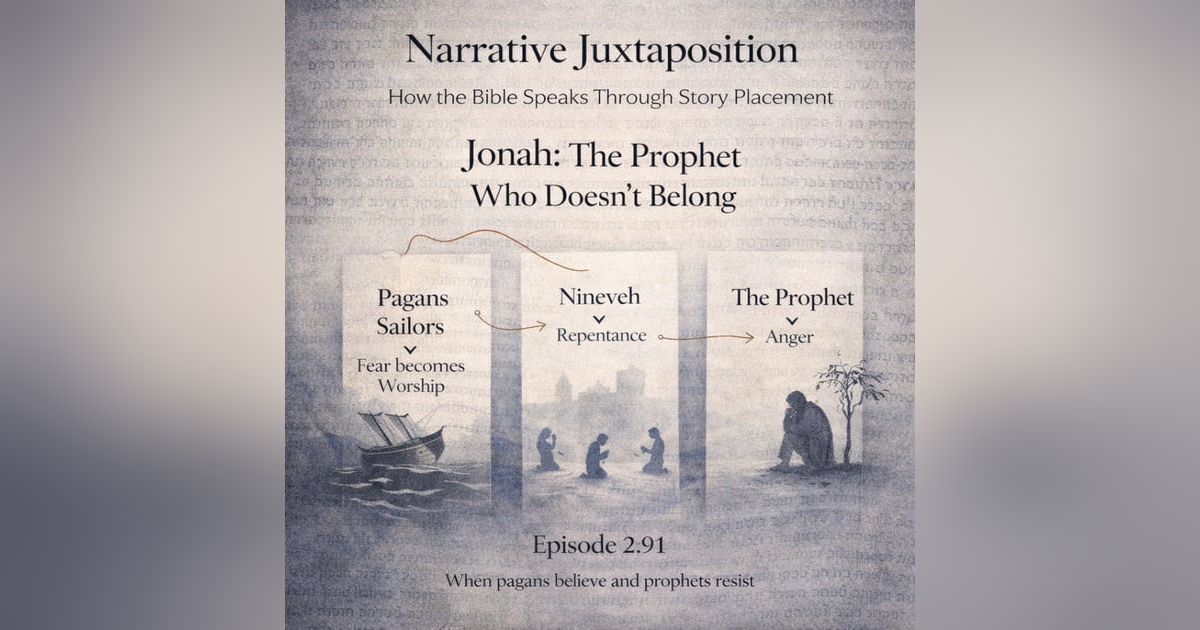


Episode 2.91
Jonah: The Prophet Who Doesn’t Belong
In this episode of the Narrative Juxtaposition series, Michael and Zach explore one of the most unusual books in the prophetic collection: Jonah. Unlike the surrounding prophets filled with poetic oracles and covenant warnings, Jonah reads like a narrative filled with irony, humor, and uncomfortable reversals. The question quickly emerges: why is this story placed among the prophetic books at all?
The episode argues that Jonah’s placement is intentional. Rather than delivering extended prophetic speeches, the book exposes the heart of the prophet himself. The story unfolds as a series of moral reversals in which the pagan characters repeatedly respond to God more faithfully than the prophet who knows Him best.
The pagan sailors in chapter one move from fear to reverence, praying to the Lord and offering sacrifices. The city of Nineveh responds to Jonah’s brief warning with immediate repentance. Meanwhile Jonah resists God’s call, avoids prayer, and ultimately becomes angry when God shows mercy.
Through these narrative contrasts, the book critiques religious pride, exposes the danger of nationalistic theology, and reminds readers that God’s compassion extends far beyond the boundaries His people might prefer. Jonah understands God’s character—gracious, compassionate, and slow to anger—but he resents the implications of that mercy when it reaches Israel’s enemies.
By placing Jonah among the prophets, the Old Testament provides a powerful internal critique of prophetic pride and spiritual entitlement. Before Israel hears judgment against the nations, the story forces God’s people to confront their own resistance to the global scope of God’s mercy.
The episode concludes by tracing the larger biblical trajectory. Jesus later identifies Himself as greater than Jonah, embodying the opposite posture: running toward sinners, embracing suffering, and rejoicing in repentance. The story ultimately challenges readers to ask whether their theology fuels compassion and mission—or quietly resists the wideness of God’s mercy.
Find our videocast here: https://youtu.be/9dcsWOwGRC0
Merch here: https://take-2-podcast.printify.me/
Music from #Uppbeat (free for Creators!):
https://uppbeat.io/t/reakt-music/deep-stone
License code: 2QZOZ2YHZ5UTE7C8
Find more Take 2 Theology content at http://www.take2theology.com


